طوافِ وداع — الزام اور رفق کے درمیان
دلائل، استدلال کے طریقوں، اختلاف کے مناطات اور مقاصدی ترجیح کا علمی جائزہ
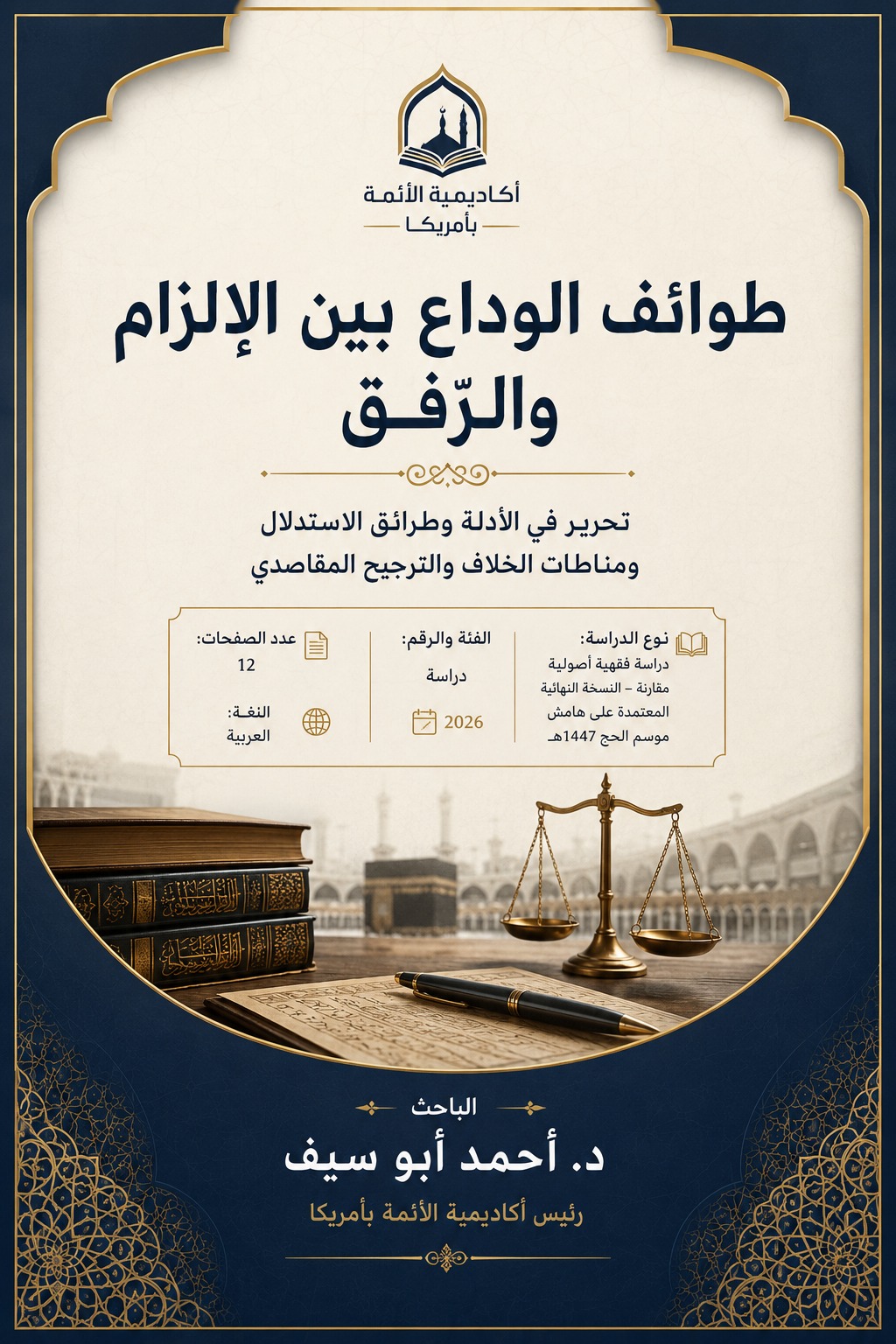
فقہی اصولی مقاصدی تقابلی دراسۃ — حجِ ۱۴۴۷ھ کے موقع پر حتمی مدوّن نسخہ
حج سیزن ۱۴۴۷ہجری (۲۰۲۶ء)
12
عربی
تحقیق کا خلاصہ
طوافِ وداع کے حکم میں فقہی، اصولی اور مقاصدی تقابلی دراسۃ۔ محقق محلِ نزاع کو واضح کرتا ہے اور بتاتا ہے کہ اختلاف کا محور نصّ کا ثبوت نہیں بلکہ امر کی دلالت، حائض کی رخصت، عبادت کی خودمختاری یا ارتباط، اور دم سے جبر ہے۔ تین فقہی اقوال پیش کرنے کے بعد — وجوب مع الجبر بالدم، سنیّت بلا شیء، اور وجوب بلا دم (ظاہریہ) — محقق اصل طلب اور دم کے جبر کے درمیان تلازم توڑتا ہے اور راجح قول ترک پر دم نہ ہونے کا ٹھہراتا ہے، جمہور کے موقف کو وزنی اور مضبوط قرار دیتے ہوئے۔ یہ دو معتبر اقوال کے درمیان موازنہ ہے، کسی امام پر خطأ کا الزام نہیں۔
مکمل متن
⏱ 17 منٹ مطالعہدراسةٌ فقهيةٌ أصوليةٌ مقاصديةٌ مقارِنة — تحريرٌ في الأدلة وطرائق الاستدلال ومناطات الخلاف والترجيح المقاصدي. (النسخة النهائية الجامعة — على هامش موسم الحج ١٤٤٧هـ). إعداد: د. أحمد محمد أبو سيف، رئيس أكاديمية الأئمة بأمريكا (American Imams Academy).
المقدمة
الحمد لله الذي شرع المناسكَ معالمَ للتوحيد، والصلاة والسلام على نبيّه القائل: «خذوا عنّي مناسككم» (رواه مسلم [١٢٩٧] من حديث جابر)؛ أما بعد، فإن طواف الوداع من المسائل التي تتجاذبها قراءتان: قراءةُ الإلزام التي ترى وجوبَه وجبرَ تركه بدمٍ، وقراءةُ الرفق التي ترى أنه سنّةٌ مؤكَّدةٌ لا شيء في تركها؛ ومردُّ هذا التجاذب — في حقيقته — إلى فهم النصّ ودلالة الأمر، ومفهومِ الترخيص للحائض، وتكييفِ رتبة هذا الطواف ومناطه.
وقد جرى تحريرُ هذه الدراسة على منهجٍ يصل التحليلَ بالتأصيل، مستصحِباً طريقةَ ابن رشد الحفيد في «بداية المجتهد» من ردّ الفروع إلى أصولها وكشفِ أسباب الاختلاف ومناطاته الحقيقية لا صورها؛ فلا يُكتفى بحكاية الأقوال، بل يُبيَّن لِمَ اختلفوا، وأين مفصلُ النزاع. والمسألةُ — كما سيظهر — اجتهاديةٌ سائغةٌ، يميل التحقيق فيها إلى القراءة المخفِّفة مع الإنصاف التامّ لحجّة الموجِبين. وأئمةُ القول بالوجوب من الجلالة في العلم والإمامة بمكانٍ رفيع، فلا يُعرَض لأقوالهم إلا بأدبٍ وإكبار؛ وسبيلُنا أن نَعرِض حُجّتهم بأقوى صورها ثم نناقشَها بعلمٍ وأناةٍ، فإن مخالفتهم لا تُنقِص من قدرهم، ولا يُستدرَك على مثلهم إلا توقيراً واعترافاً بفضل السابقة والإمامة.
وتنتظم الدراسةُ في تمهيدٍ يحرّر المفهوم والفرق بين الطوافين، ثم تحريرِ محلّ النزاع وأقوالِ الفقهاء، فالأدلةِ وطرائقِ الاستدلال مع تحليل الألفاظ والأسانيد، فمناقشةِ الأدلة، فاستخراجِ مناطات الخلاف على طريقة ابن رشد، فبيانِ نظائر الطلب المؤكَّد، وأحكامِ ما بعد الوداع، وتعديةِ الرخصة وتحقيقِ مناط العذر والمشقّة، ثم الترجيحِ المقاصدي والخاتمة. وقد رُوعي في التوثيق التحقيقُ من المصادر المعتمدة، وتخريجُ الأحاديث، والاقتصارُ في تكرار الشواهد على إثباتها كاملةً عند أول ورودها ثم الإحالةِ إليها.
التمهيد: المفهوم وموضعه، والفرق بينه وبين طواف الإفاضة
طوافُ الوداع لغةً مأخوذٌ من التوديع عند الرحيل، سُمّي به لأنه آخِرُ العهد بالبيت عند مفارقة مكة، ويُسمّى طوافَ الصَّدَر. وهو اصطلاحاً: الطوافُ بالبيت سبعاً عند إرادة الخروج بعد الفراغ من المناسك، فيكون آخرَ العمل بمكة.
ولا بدّ في مفتتح البحث من التحرُّز من خلطٍ شائعٍ بين طوافين: فطوافُ الإفاضة (الزيارة) ركنٌ بالإجماع لا يتمّ الحجُّ إلا به، ولا يسقط بالحيض بل تنتظر الحائضُ حتى تطهر فتطوف؛ أمّا طوافُ الوداع فمتأخّرٌ عند الخروج، وليس ركناً بالإجماع، ويسقط عن الحائض بلا خلافٍ معتبَر. وهذا التمييزُ مفتاحٌ لفهم أدلة الباب، إذ يقع كثيرٌ من الوهم بإجراء حكم أحدهما على الآخر.
المبحث الأول: تحرير محلّ النزاع
ضبطُ المتّفق عليه يَحسِم كثيراً من توهُّم الخلاف. فقد اتّفق الفقهاء على أن طواف الوداع مشروعٌ في الجملة، وأنه ليس ركناً فلا يفسد الحجُّ بتركه، وأنه يسقط عن الحائض والنفساء فتنفِران بلا شيء، وأنه يختصّ بمن أراد الخروج بعد فراغه من المناسك ليكون آخرَ العهد بالبيت. وإنما انحصر النزاعُ في حكمه التكليفيّ: أواجبٌ يأثم تاركُه ويلزمه دمٌ جبراً، أم سنّةٌ مؤكَّدةٌ لا يلزم بتركها شيء؟ ويتفرّع عنه ما يترتّب على الترك من دمٍ وعدمِه، وحكمُ المعتمر، وحكمُ ما يقع بعد الوداع من بيعٍ وإقامة.
المبحث الثاني: أقوال الفقهاء ونسبتها إلى أصحابها
تنتظم أقوالُ أهل العلم في ثلاثة: فالقولُ الأول أنه واجبٌ يُجبَر بدمٍ، وهو قول جمهور الحنفية والحنابلة، وهو الأصحّ المعتمَد عند الشافعية على قولين في المذهب. والقولُ الثاني أنه سنّةٌ (أو مستحبٌّ) لا شيء في تركه، وهو مذهب المالكية ووافقهم القولُ الآخر عند الشافعية. والقولُ الثالث أنه فرضٌ وتاركُه آثمٌ بلا دمٍ، وهو ظاهرُ اختيار ابن حزم؛ فإنه أوجبه بالظاهر ولم يُوجِب فيه دماً على أصله في ردّ القياس، بل التوبةُ والاستغفار. ويُلحَظ أن نفيَ الركنية متّفقٌ عليه ولا يستلزم نفيَ الوجوب، فالمنازعةُ في أصل الوجوب لا في الركنية المنفيّة اتفاقاً.
المبحث الثالث: الأدلة وطرائق الاستدلال، مع تحليل الألفاظ والأسانيد
أولاً: أدلّة القائلين بالوجوب وطريقةُ استدلالهم
عمدةُ الموجِبين حديثُ ابن عباس: «أُمِرَ الناسُ أن يكونَ آخِرُ عهدِهم بالبيتِ، إلا أنه خُفِّفَ عن الحائضِ» (متفق عليه: البخاري [١٧٥٥]، ومسلم [١٣٢٨])؛ ووجهُ الاستدلال من جهتين: بناءُ الفعل للمجهول «أُمِر» يدلّ على آمرٍ هو الشارع فيقتضي الوجوب، والاستثناءُ «إلا أنه خُفِّف عن الحائض» قرينةٌ على اللزوم، إذ لا يُرخَّص إلا فيما الأصلُ فيه الإلزام. ويعضُده لفظُ مسلم: «لا يَنفِرَنَّ أحدٌ حتى يكونَ آخِرُ عهدِه بالبيتِ» (مسلم [١٣٢٧])، فالنهيُ المؤكَّد بالنون عن النَّفْر قبل الطواف يفيد لزومَه. ويستأنسون بحديث صفية في إسقاطه عن الحائض رخصةً، والرخصةُ ترفع لازماً.
وأمّا الجبرُ بالدم فليس له عندهم دليلٌ خاصٌّ في الوداع، بل هو فرعٌ عن تكييفه واجباً من واجبات الحج، ثم إلحاقُه بقاعدة «من ترك واجباً من واجبات الحج جبره بدمٍ» المستندة إلى أثر ابن عباس. ومن ثَمّ كان إيجابُ الدم فرعاً على إثبات الوجوب أوّلاً، وهي نقطةٌ يعود إليها النزاع.
ثانياً: أدلّة القائلين بالسنّيّة وطريقتُهم
يحمل المالكيةُ الأمرَ على الندب بقرينة الترخيص، وعمدتُهم أن سقوطه عن الحائض بلا بدلٍ ولا قضاءٍ دليلُ عدم الوجوب، إذ الواجبُ لا يسقط بالحيض بل يُنتظَر أو يُجبَر؛ ويعضُده استصحابُ براءة الذمّة، وقياسُه على طواف القدوم بجامع أن كلاًّ تابعٌ غيرُ ركن. وأمّا «عمل أهل المدينة» فمع كونه أصلاً عند مالك، لم أقف على نصٍّ صريحٍ يحتجّ به المالكية لهذه المسألة بعينها، فلا يُنسَب إليهم من غير تثبُّت؛ غير أنه يُقال استنباطاً: إن مالكاً أعلمُ الناس بالعمل، فلو كان مُلزِماً بدمٍ لكان أولى بنقله، فعدولُه قرينةٌ تشهد للتخفيف. وأمّا الظاهريةُ فأخذوا بظاهر الأمر فأوجبوه، وجعلوا أثرَ تركه الإثمَ والتوبةَ لا الدمَ.
ثالثاً: مناسبةُ الورود وتحليلُ الألفاظ والأسانيد
ومما يضيء الدلالةَ مراعاةُ مناسبة الورود: فقد جاء لفظُ النهي على تفرُّق الناس في الانصراف، كما في رواية مسلم (١٣٢٧): «كان الناسُ ينصرفون في كلِّ وجهٍ»، فالسياقُ متّصلٌ بضبط النَّفير لا بإنشاء نسكٍ مبتدأٍ. ومن جهة اللفظ، فإن «آخِرُ عهده بالبيت» تعبيرٌ عن خَتْم الزيارة وتوديعِ البيت، علّقه الشارعُ بالبيت لا بالحجّ؛ وأمّا «لا يَنفِرَنَّ» فظاهرٌ في تأكُّد الطلب. وقد يُستأنَس — استئناساً خفيفاً لا قياساً مُلزِماً — بأن من التوجيه النبويّ ما رُوعي فيه مقصدُ تدبير حركة الجماعة، كحديث «لا يُصَلِّيَنَّ أحدٌ العصرَ إلا في بني قُرَيظة» (رواه البخاري [٤١١٩])؛ مع التسليم بأن الفارقَ قائمٌ، فالطوافُ تعبّدٌ في أصله لا يُقاس على توجيهٍ تدبيريٍّ محض، فلا يُحمَّل هذا النظيرُ فوق طاقته.
وأمّا الأسانيدُ فالحديثان في الصحيحين، فلا مطعن في الثبوت، ومدارُ النزاع الدلالةُ لا الرواية. وصيغةُ «أُمِر الناس» من ابن عباس لها حكمُ الرفع على الصحيح عند أهل النقل (ينظر: الكفاية للخطيب البغدادي)، فتقوّي ثبوتَ أصل الطلب وتُبقي النزاعَ في رتبته. وتبقى لفظةُ «إلا أنه خُفِّف عن الحائض» موضعَ بحثٍ في رفعها وإدراجها، وله أثرٌ في قوة الاستدلال بها على الرفع.
المبحث الرابع: مناقشة الأدلة
مفصلُ المناقشة تحريرُ معنى «أحابِسَتُنا هي؟» (حديث صفية، متفق عليه: البخاري [١٧٥٧]، ومسلم [١٢١١]): فإن النبيَّ صلى الله عليه وسلم ظنّ أنها لم تَطُف طوافَ الإفاضة — وهو الركنُ الذي يَحبِس الرَّكْبَ ولا يسقط بالحيض — فلمّا أُخبِر أنها أفاضت أذِن لها بالنَّفْر، فأسقط عنها طوافَ الوداع. فالحبسُ المنفيُّ متعلّقٌ بالإفاضة، وموضعُ الشاهد إسقاطُ الوداع؛ وهذا التمييزُ يمنع الخلطَ بين الطوافين.
ومن هنا تتقابل قراءتان للحديث الواحد: قراءةُ المالكية أن الإسقاط بلا بدلٍ قرينةُ عدم الوجوب، وقراءةُ الجمهور أنه رخصةٌ خاصّةٌ بالعذر لا تنفي الوجوبَ عمّن سواها. والفصلُ بينهما لا يكون بالحديث وحده — إذ هو محتمِلٌ لهما — بل يرجع إلى تحرير دلالة الأمر؛ وبهذا يتبيّن أن النزاع أصوليٌّ في الرتبة لا حديثيٌّ في الثبوت.
تفكيكُ التلازم بين الوجوب والجبر بالدم: منازلةُ القياس الشمولي
وأقوى ما يتمسّك به الجمهورُ في الجبر بالدم — وهو موضعُ المنازلة الحقيقيّ الذي يجب أن يُعرَض بأقوى صوره — قياسٌ شموليٌّ محكَم: أن طواف الوداع نسكٌ من مناسك الحج، وقد ثبت عن حَبر الأمة ابن عباس رضي الله عنهما: «من نَسِيَ من نُسُكِه شيئاً أو تركه فليُهرِقْ دماً» (رواه مالك في الموطأ، والبيهقي في السنن الكبرى، موقوفاً)، وهو موقوفٌ له حكمُ الرفع إذ لا تُثبَت الدماءُ بالرأي؛ فيدخل الوداعُ في هذا العموم دخولاً ظاهراً، ويتأكّد بالأمر الصريح «أُمِر الناس» والنهيِ المؤكَّد «لا يَنفِرَنَّ». فهذه حجّةٌ متينةٌ ظاهرةُ المأخذ، لا يُنصِف من تهوّن بها، وأربابُها أئمةٌ أجلّاء.
والمنازلةُ الصحيحة لهذا القياس ليست بإنكار الأثر — فهو ثابتٌ معمولٌ به — بل بمنع دخول الوداع في عمومه؛ إذ مدارُ الأثر على لفظ «النُّسُك»، وهو ما كان جزءاً من ماهية الحج وأعمالِه المؤقَّتة بزمانه ومكانه؛ وطوافُ الوداع ليس كذلك: فهو غيرُ مؤقَّتٍ بزمان الحج (يومِ النحر وأيامِ التشريق) ولا بمكانه المخصوص، ولا يفوت الحجُّ بتركه، وإنما عُلِّق بمفارقة البيت لا بأعمال النسك («آخِرُ عهده بالبيت»). فهو أشبهُ بعبادةٍ مستقلّةٍ متعلّقةٍ بتوديع الحرم — كتحيّة المسجد عند دخوله — لا جزءاً من النسك يُجبَر نقصُه. فإذا خرج عن مسمّى «النُّسُك» المجبور لم يلزم في تركه دمٌ؛ إذ الدمُ عقوبةٌ ماليةٌ نُسُكيّةٌ لا تَثبُت إلا بنصٍّ خاصٍّ أو قياسٍ جليٍّ، وكلاهما منتفٍ هنا، والبراءةُ الأصلية تَدرَؤه. وهذا التفكيكُ بين أصل الطلب والجبرِ بالدم هو مِفصَلُ التحقيق في المسألة.
ويُقوّي هذا المسلكَ أمران: أن أهل الظاهر — على إمامتهم في التمسّك بالنصّ — قالوا بوجوبه ولم يُوجِبوا دماً لانتفاء النصّ؛ فاجتمع على نفي الدم المخفِّفون والظاهرية مع تباين مشاربهم. والثاني — وهو مَعينٌ يُستكمَل بالبحث التاريخي —: أنه لم يُنقَل، فيما وقفنا عليه، نصٌّ خاصٌّ بإيجاب دمٍ على تاركِ الوداع بعينه، ولا أثرٌ مشتهرٌ عن الصحابة بإلزام تاركِه بدمٍ، وإنما مدارُ الإيجاب على العموم المتقدّم؛ وهذا يَشُدّ من أزر البراءة الأصلية في إسقاط العقوبة المالية.
ضابطُ النُّسُك وتمييزُ العبادة التابعة عنه
ولمّا كان مدارُ نفي الدم على إخراج الوداع من مسمّى «النُّسُك» في أثر ابن عباس، وجب تحريرُ هذا الضابط تحريراً يَسلَم من دعوى التوصيف المُرسَل. والنُّسُكُ في عُرف الفقهاء: ما كان من أعمال الحج الداخلة في ماهيته وصحّته، المؤقَّتة بزمانه ومكانه المخصوصين — كالوقوف بعرفة، وطوافِ الإفاضة، والسعي، والرميِ، والمبيتِ بمنى ومزدلفة — بحيث يتعلّق بتركها خللٌ في النسك نفسه يُجبَر بالدم؛ وإلى هذا الجنس انصرفت قاعدةُ «من ترك نُسُكاً فعليه دمٌ»، لا إلى كل عبادةٍ تقع في الموسم.
ويُختبَر هذا الضابطُ بميزانٍ دقيقٍ هو طوافُ القدوم: فإنه طوافٌ يقع في الحجّ، ومع ذلك هو سنّةٌ عند الجمهور لا يُجبَر تركُه بدمٍ، لأنه تحيّةُ البيت عند الدخول لا ركنٌ في ماهية الحج؛ فدلّ قطعاً على أن مجرّد وقوع الطواف في الحجّ لا يُدخِله في «النُّسُك المجبور»، وإلا لَلَزِم الدمُ في ترك القدوم، ولا قائل به من الجمهور.
وبهذا يتبيّن مَوضِعُ طواف الوداع على الميزان: فهو — كالقدوم — متعلّقٌ بالبيت لا بماهية الحج؛ غير أن القدوم تحيّةُ دخولٍ والوداعَ تحيّةُ خروجٍ ومفارقةٍ، وكلاهما لا يفوت الحجُّ بتركه ولا يُؤقَّت بزمان النسك ومكانِه. بخلاف طواف الإفاضة الذي هو ركنٌ لا يتمّ الحجُّ إلا به. فاستبان أن النُّسُك المجبور مناطُه الدخولُ في ماهية الحج، وأن الوداع خارجٌ عنه، فلا يَلحَقه عمومُ أثر ابن عباس؛ فيبقى تاركُه على البراءة الأصلية في نفي الدم، وإن سُلّم بتأكُّد طلبه. وبهذا التحرير يَنحسِم مركزُ الثقل في المسألة الذي إليه تعود ثمرةُ النزاع.
المبحث الخامس: مناطات الخلاف على طريقة ابن رشد
جرياً على طريقة ابن رشد في ردّ الفروع إلى أصولها، يتبيّن أن الخلاف لا يرجع إلى تعارضٍ في الثبوت، بل إلى مناطاتٍ يَنتظمها أصلٌ واحد هو دلالةُ الأمر. فالمناطُ الأول والأكبر: دلالةُ الأمر في «أُمِر الناس» و«لا ينفِرنّ» — أللوجوب أم للندب بقرينة؟ والثاني: تكييفُ رخصة الحائض — أرخصةٌ لعذرٍ لا تنفي الوجوب (الجمهور) أم قرينةُ صرفٍ تنفيه (المالكية)؟ والثالث: مفهومُ الاستثناء؛ فالتخصيصُ يُثبِت شمولَ الطلب لا رتبتَه. والرابع: صحّةُ القياس على واجبات الحج في إيجاب الدم، وهو فرعٌ على إثبات الوجوب. والخامس: تعارضُ الأصل (البراءة) والظاهر.
ومن أدقّ المناطات تكييفُ العبادة استقلالاً وارتباطاً: أهي نسكٌ حجّيٌّ تابعٌ، أم عبادةُ توديعٍ للبيت مستقلّة؟ وقد نقل النووي الخلافَ في ذلك (المجموع شرح المهذب، كتاب الحج)؛ ويَعضُد الاستقلالَ أنه لا يرتبط بأركان الحج وواجباته ارتباطَ الجزء بالكلّ (فليس ركناً، ولا يُفعَل في زمان الحج ومكانه، بل عند الخروج)، وأن النصّ علّقه بالبيت لا بالحج. فإن صحّ أنه عبادةُ توديعٍ تأدّبيةٌ ضعُف إلحاقُه بأحكام النسك ومنها الجبرُ بالدم.
ويتّصل بهذا بُعدٌ تنظيميٌّ يكشف مناطَ التفريق بين الحج والعمرة: فإن الجمهور خصّوا الوداعَ بالحجّ، ولعلّ مردَّ ذلك — في جانبٍ منه — إلى أن تكدُّس الناس في موسم الحج أعظمُ منه في العمرة بمراتب، والنَّفيرُ العامُّ مَظِنّةُ فوضى الحركة؛ فجاء التوجيهُ لضبط حركة الجموع وجعلِ آخِرِ العهد بالبيت نقطةَ انتظامٍ جامعة. وهذا يقوّي أنه أدبُ ختامٍ منظِّمٌ لحركة المجتمع، ويلتئم به مناطُ التفريق بين الحج والعمرة. على أنّا لا نُلغي البُعدَ التعبّدي في الطواف ولا نختزله في التنظيم؛ فالطوافُ تعبّدٌ في أصله، وإنما المقصدُ التنظيميُّ مُعِينٌ على فهم النصّ ومُرجِّحٌ لأحد محتمليه، لا مُلغٍ للتعبّد ولا منشئٌ للحكم. فيبقى أثرُه قرينةً مُرجِّحةً لا أصلاً مستقلاًّ.
المبحث السادس: نظائرُ الطلب المؤكَّد بلا تثريبٍ على التارك
ومما يُعِين على تنزيل الرتبة — قرينةً مساندةً لا دليلاً مستقلاًّ — أن في الشريعة عباداتٍ تأكَّد طلبُها ولم تبلغ الإلزامَ الجابر: كالوتر الذي قال فيه أبو حنيفة بالوجوب وجعله الجمهورُ سنّةً مؤكَّدة، وسنّةِ الفجر آكدِ النوافل (مسلم [٧٢٥])، والسواكِ الذي نصّ فيه على أن المشقّة منعت رفعَه إلى الأمر اللازم («لولا أن أشقّ على أمتي» — متفق عليه: البخاري [٨٨٧]، ومسلم [٢٥٢])، بل صلاةِ الجماعة التي ورد فيها الوعيدُ الشديد بتحريق بيوت المتخلّفين (متفق عليه: البخاري [٦٤٤]، ومسلم [٦٥١]) ولم يجعلها جمهورُ المالكية والشافعية شرطاً للصحّة ولا فرضَ عينٍ.
وفي هذه النظائر فارقٌ يُعترَف به إنصافاً: أن في الوداع صيغةَ طلبٍ أقوى («أُمِر»، «لا ينفِرنّ»)، لكنّ هذا الفارق إنما يؤثّر في رتبة أصل الطلب لا في مناط القياس، إذ المقصودُ أن تأكُّد الطلب لا يستلزم الجبرَ بالدم. بل في الوتر وجهٌ يقوّي الإلحاق: فهو متكرّرٌ كلَّ ليلةٍ لازَمه النبيُّ صلى الله عليه وسلم منفصلاً عن الفرض، ومع ذلك لم يبلغ الإيجابَ الجابر؛ فالوداعُ الذي لا يتأتّى إلا مرّةً ولا يرتبط بأركان الحج أَولى بنفي الجبر. ومع ذلك تبقى هذه قرينةً مؤيِّدةً تُورَد بعد تحرير دلالة الأمر لا قبله.
المبحث السابع: الأحكام المترتّبة على الوداع ومدى الحرج فيها
قرّر جمعٌ من الفقهاء أن من ودّع ثم باع أو اشترى أو أقام أعاد الطواف، حملاً لـ«آخِر عهده بالبيت» على لُصوق الطواف بالخروج. غير أن المحقّقين خفّفوا فقرّروا أن شراءَ الزاد وحوائجِ الطريق اليسيرة وقضاءَ الحاجة العارضة لا يقطع كونَه آخرَ العهد، وإنما يقطعه طولُ الإقامة والاستيطانُ والتجارة. ومقتضى هذا أن التشديد بمنع كل بيعٍ وحاجةٍ تكلُّفٌ يخالف مقصدَ الرفق؛ فالمقصودُ أن يكون الوداعُ خاتمةَ العهد ثم الانصراف، وهو شاهدٌ فرعيٌّ على أن روح الباب التيسيرُ لا التضييق.
المبحث الثامن: تعديةُ الرخصة وتحقيقُ مناط العذر والمشقّة
ثبوتُ سقوطه عن الحائض يفتح بابَ تنقيح المناط: فالعلّةُ العذرُ المانعُ والعجزُ لا الحيضُ لذاته؛ فبتنقيح المناط تتعدّى الرخصةُ إلى النفساء والمريضِ العاجز والخائفِ على نفسه أو ماله ومن يخاف فواتَ رفقته أو تلحقه مشقّةٌ فادحةٌ كالزحام الشديد، وقد ألحق الفقهاءُ المعذورَ بالحائض. ويُحرَّر هنا ضابطُ القاعدة الكبرى «المشقّةُ تجلب التيسير»: أن المعتبَر المشقّةُ الخارجةُ عن المعتاد المُضِرّة، لا المعتادةُ الملازمةُ لجنس العبادة؛ فالزحامُ اليسيرُ لا يُترخَّص به، والاختناقُ الشديدُ المُضرّ يُترخَّص به.
ومن تمام التحقيق أن الشريعة تبني الرُّخَص على مظنّة المشقّة لا على تحقُّقها في كل أحد، كقصر المسافر المترفِّه؛ فمظنّةُ الزحام وفواتِ الرفقة كافيةٌ في إعمال الرخصة لمن غلب على ظنّه لُحوقُ المشقّة. فاتّساعُ مناط العذر، واعتبارُ المشقّة غير المعتادة، وبناءُ الرخصة على المظنّة — ثلاثتُها تؤكّد أنه أدبُ ختامٍ مؤكَّدٌ ترتفع عنه الأعذارُ، إذ لو كان واجباً جابراً لَما اتّسع إسقاطُه بالأعذار والمظانّ هذا الاتّساع.
المبحث التاسع: الترجيح المقاصدي المعلَّل
قبل الترجيح يَلزَم تحريرٌ أصوليٌّ يمنع توهُّمَ بناء الحكم على المقاصد وحدها: فظاهرُ الأمر والنهي الوجوبُ، ولا يُنكَر هذا الظهورُ للجمهور، لكنّ دعوى صرفِه إلى الندب تفتقر إلى قرينةٍ ناهضة؛ والترخيصُ للحائض لا يَصلُح وحدَه صارفاً، لكنه لا يرفع احتمالَ كون الطلب مؤكَّداً غيرَ جابر، فيبقى النزاعُ في الرتبة. والاستثناءُ يُثبِت شمولَ الطلب لا رتبتَه. وأثرُ الدم أصلٌ عامٌّ لا نصٌّ خاصٌّ، فإلحاقُ الوداع به فرعٌ على إثبات وجوبه. فتحصّل أن أدقَّ مواضع النظر في مذهب الموجِبين — مع جلالتهم — هو مأخذُ الجبر بالدم لافتقاره إلى نصٍّ خاصّ وابتنائه على إثبات الوجوب أوّلاً؛ وإلى هنا يكون النظرُ أصوليّاً محضاً، ثم تأتي المقاصدُ مُرجِّحةً بين الاحتمالين لا منشئةً للحكم.
وعلى هذا التحرير يَظهَر أن المتيقَّن من الترجيح هو نفيُ الجبر بالدم؛ فإمّا أن يكون الوداعُ سنّةً مؤكَّدةً لا شيءَ في تركها كما اختار مالكٌ — وهو ما يميل إليه الباحث —، وإمّا واجباً مستقلاًّ متعلّقاً بمفارقة الحرم لا جابرَ لتركه إلا التوبةُ كما هو لازمُ مذهب الظاهرية؛ والقولان يلتقيان عند الغاية: سقوطُ الدم. ولا تعارُضَ بين تقديمنا السنّيّةَ وبين تسليمنا بقوة ظاهر الأمر عند الجمهور؛ فالمُسلَّمُ تأكُّدُ الطلب لا تعيُّنُ الوجوب، والقرائنُ (تيسيرُ المعذور، ونظائرُ الطلب المؤكَّد بلا جابر) تُنزِله رتبةَ السنّة المؤكَّدة؛ ومن تعيَّن عنده الوجوبُ بظاهر الأمر فالمتيقَّن المشترك بيننا وبينه نفيُ الجبر بالدم لخروج الوداع عن مسمّى النُّسُك المجبور. وبيانُه في ستة محاور موازِنةٍ لا مرافِعة:
الأول: أصالةُ البراءة، والاحتياطُ في الأبدال الماليّة فلا تُشغَل الذمّةُ بمالٍ يُراق إلا بدليلٍ ناهض. الثاني: سقوطُه عن الحائض بلا بدلٍ ولا قضاء؛ ولا نجعله صارفاً للأمر عن الوجوب — إذ سقوطُ الواجب للعذر لا يسلبه رتبتَه، كالصلاة تسقط عن الحائض ولا تصير سنّةً — وإنما نجعله قرينةً على أنه ليس ركناً مقصوداً لذاته وأن بابَه التيسير، فيَعضُد نفيَ الجبر لا نفيَ أصل الطلب. الثالث: قرينةُ التيسير الظاهرة في إذنه صلى الله عليه وسلم بالنَّفْر «فلتنفِرْ» من غير تكليفٍ ببدل. الرابع: حكومةُ الكلّيات القطعية (اليُسرُ ورفعُ الحرج) على الآحاد الظنّية، بوصفها مُرجِّحةً بين محتملين لا منشئةً، إذ الجمهورُ يُقِرّون بها وأوجبوا. الخامس — وهو العمدة: أن الجبر بالدم عائدٌ إلى إدخال الوداع في «النُّسُك» المجبور، وقد تبيّن خروجُه عنه لكونه عبادةً مستقلّةً متعلّقةً بمفارقة الحرم لا جزءاً من ماهية الحج؛ فلا يدخل في عموم أثر ابن عباس أصلاً، ويؤيّده أن أهل الظاهر قالوا بالوجوب ولم يُوجِبوا دماً. السادس: الإنصافُ لحجّة الجمهور؛ وهو قولٌ وجيهٌ له حظُّه من النظر، متينُ المأخذ من جهة ظاهر الأمر والنهي والقياسِ الشموليّ، وأئمتُه أجلُّ من أن يُستدرَك عليهم إلا بأدبٍ وإكبار؛ غير أن الذي يترجّح عندنا أن مأخذ الدم يضعُف عند الموازنة لخروج الوداع عن مسمّى النُّسُك المجبور، فيبقى لأصل الطلب وجهٌ قويّ، ويبقى إلزامُ التارك بالدم هو الموضعَ المتّجِهَ إليه النظر.
وإنّ الناظرَ المتأمّل إذا وازن بين أن يُثبِت في ذمّة الحاجّ دماً يُراق بعمومٍ لم يُقصَد به الوداعُ قصداً أوّلياً، وبين أن يُبقِيَ ذمّتَه على البراءة الأصلية حتى يقومَ دليلٌ خاصٌّ ناهض — وجد أن الأناةَ في إيجاب الدماء أحرى وأحوط؛ فإن الشارعَ تشوَّف إلى حقن المال كما تشوَّف إلى صيانة النسك. ثم إن تنزيلَ الوداع منزلةَ السنن التي تأكَّدت ولم تُقرَن بجابرٍ — كالوتر وركعتي الفجر — أليقُ بمذاق الشريعة في خواتيم العبادات من قَرْن توديع البيت بغرامةٍ ماليّة. فمن لطائف هذا الدين أن يكون آخرُ العهد بالبيت محبّةً وتوديعاً وانطباعاً للقلب على تعظيم الحرم، لا غُرماً يُثقِل المنصرف؛ وهذا هو الذي تطمئنّ إليه النفسُ، ويتّسق مع كلّيات اليُسر، من غير جَورٍ على حجّة الجمهور ولا تهوينٍ من إمامتهم. وهذا منتهى ما يُقال في تقوية القول بالسنّية وسقوطِ الدم، عرضاً للنظر لا قطعاً للخلاف.
ويعضُد ذلك البعدُ الواقعيُّ من غير أن يكون منشأَ الحكم: شدّةُ الزحام عند النَّفير في الأزمنة المتأخّرة. وأمّا المعتمرُ فالأمرُ في حقّه أخفُّ، وغايتُه الاستحبابُ خروجاً من الخلاف. فالحاصلُ أن من احتاط وطاف فقد أحسن وأصاب السنّة، ومن تركه — سيّما لعذرٍ أو مشقّةٍ — فلا تثريبَ عليه ولا دمَ على القول الراجح، والمسألةُ اجتهاديةٌ سائغةٌ لا إنكارَ فيها.
الخاتمة وأهمّ النتائج
خلصت الدراسةُ إلى أن طواف الوداع عبادةٌ متأخّرةٌ مشروعةٌ تكون آخرَ العهد بالبيت، ليست ركناً بالإجماع، وتسقط عن الحائض بلا خلافٍ معتبَر، ولا يُخلَط بطواف الإفاضة. وأن مدارَ الخلاف ليس الثبوتَ بل دلالةَ الأمر، وتكييفَ رخصة الحائض، وتكييفَ العبادة بين الاستقلال والارتباط، والقياسَ على واجبات الحج في الجبر بالدم، وتعارضَ الأصل والظاهر.
وأن التحقيق يقتضي فكَّ التلازم بين أصل الطلب والجبرِ بالدم: فإنّا نُسلِّم بظاهر الأمر في تأكُّد الطلب من غير تكلُّفِ صرفٍ، ثم نمنع الجبرَ بالدم لخروج الوداع عن مسمّى النُّسُك المجبور، فهو عبادةٌ مستقلّةٌ متعلّقةٌ بمفارقة الحرم لا جزءٌ من ماهية الحج يُجبَر نقصُه. والراجح — والله أعلم — نفيُ الدم عن تاركه: إمّا لأنه سنّةٌ مؤكَّدةٌ كما قال مالك (وهو ميلُ الباحث)، وإمّا لأنه واجبٌ مستقلٌّ لا جابرَ له سوى التوبة كلازمِ مذهب الظاهرية؛ سندُه أصالةُ البراءة في الأبدال، وخروجُه عن النُّسُك المجبور، ومقصدُ الرفق وكلّياتُ اليُسر، وتنزيلُه منزلةَ نظائر الطلب المؤكَّد. ومع هذا الترجيح يبقى قولُ الجمهور معتبَراً متينَ المأخذ من جهة ظاهر الأمر والقياسِ الشموليّ، وأئمتُه أجلُّ من أن يُستدرَك عليهم إلا بأدبٍ وتوقير؛ فإنما هو ترجيحُ نظرٍ بين قولين سائغين، لا تخطئةٌ لإمامٍ ولا غضٌّ من حجّة. فلا إنكارَ على محتاطٍ طاف وأصاب السنّة، ولا على مخفِّفٍ ترك لعذرٍ أو مشقّة؛ وكلٌّ مأجورٌ على اجتهاده. نسأل الله أن يُرِيَنا الحقَّ حقّاً ويرزقنا اتّباعه، وصلى الله وسلم على نبينا محمد وعلى آله وصحبه أجمعين.
قائمة المصادر والمراجع
- القرآن الكريم.
- البخاري، محمد بن إسماعيل. الجامع الصحيح. دار طوق النجاة.
- مسلم بن الحجاج. المسند الصحيح. دار إحياء التراث العربي.
- مالك بن أنس. الموطّأ. مؤسسة زايد.
- أصحاب السنن: أبو داود والترمذي والنسائي وابن ماجه. السنن.
- البيهقي، أحمد بن الحسين. السنن الكبرى. دار الكتب العلمية.
- السرخسي. المبسوط. دار المعرفة.
- الكاساني. بدائع الصنائع. دار الكتب العلمية.
- مالك (رواية سحنون). المدوّنة الكبرى. دار الكتب العلمية.
- الحطّاب الرعيني. مواهب الجليل لشرح مختصر خليل. دار الفكر.
- الدسوقي. حاشية الدسوقي على الشرح الكبير. دار الفكر.
- الباجي. المنتقى شرح الموطأ.
- ابن عبد البر. التمهيد، والاستذكار. وزارة الأوقاف المغربية / دار الكتب العلمية.
- القرافي. الذخيرة، والفروق. دار الغرب الإسلامي.
- الشافعي. الأمّ. دار المعرفة.
- النووي. المجموع شرح المهذّب، وروضة الطالبين، وشرح صحيح مسلم. دار الفكر / دار إحياء التراث.
- ابن قدامة. المغني. مكتبة القاهرة.
- المرداوي. الإنصاف. دار إحياء التراث العربي.
- ابن حزم. المحلّى بالآثار. دار الفكر.
- ابن رشد الحفيد. بداية المجتهد ونهاية المقتصد. دار الحديث، القاهرة.
- العزّ بن عبد السلام. قواعد الأحكام في مصالح الأنام. دار الكتب العلمية.
- السيوطي. الأشباه والنظائر. دار الكتب العلمية.
- ابن نجيم. الأشباه والنظائر. دار الكتب العلمية.
- الشاطبي. الموافقات. دار ابن عفان.
- الغزالي. المستصفى. دار الكتب العلمية.
- الآمدي. الإحكام في أصول الأحكام. المكتب الإسلامي.
- الخطيب البغدادي. الكفاية في علم الرواية. المكتبة العلمية.
- ابن حجر العسقلاني. فتح الباري شرح صحيح البخاري. دار المعرفة.
- الألباني. إرواء الغليل في تخريج أحاديث منار السبيل. المكتب الإسلامي.
- ابن منظور. لسان العرب. دار صادر.
- وزارة الأوقاف الكويتية. الموسوعة الفقهية الكويتية.
- الدرر السنية. الموسوعة الفقهية (مصدر إلكتروني محقَّق).