قرآنی تفسیر — واقعیت کی تجدید اور ابزار کی تجدید کے درمیان: مصنوعی ذہانت بطور نمونہ
علمِ تفسیر کی ترقی میں مصنوعی ذہانت کے مقام کی اصولی قراءت
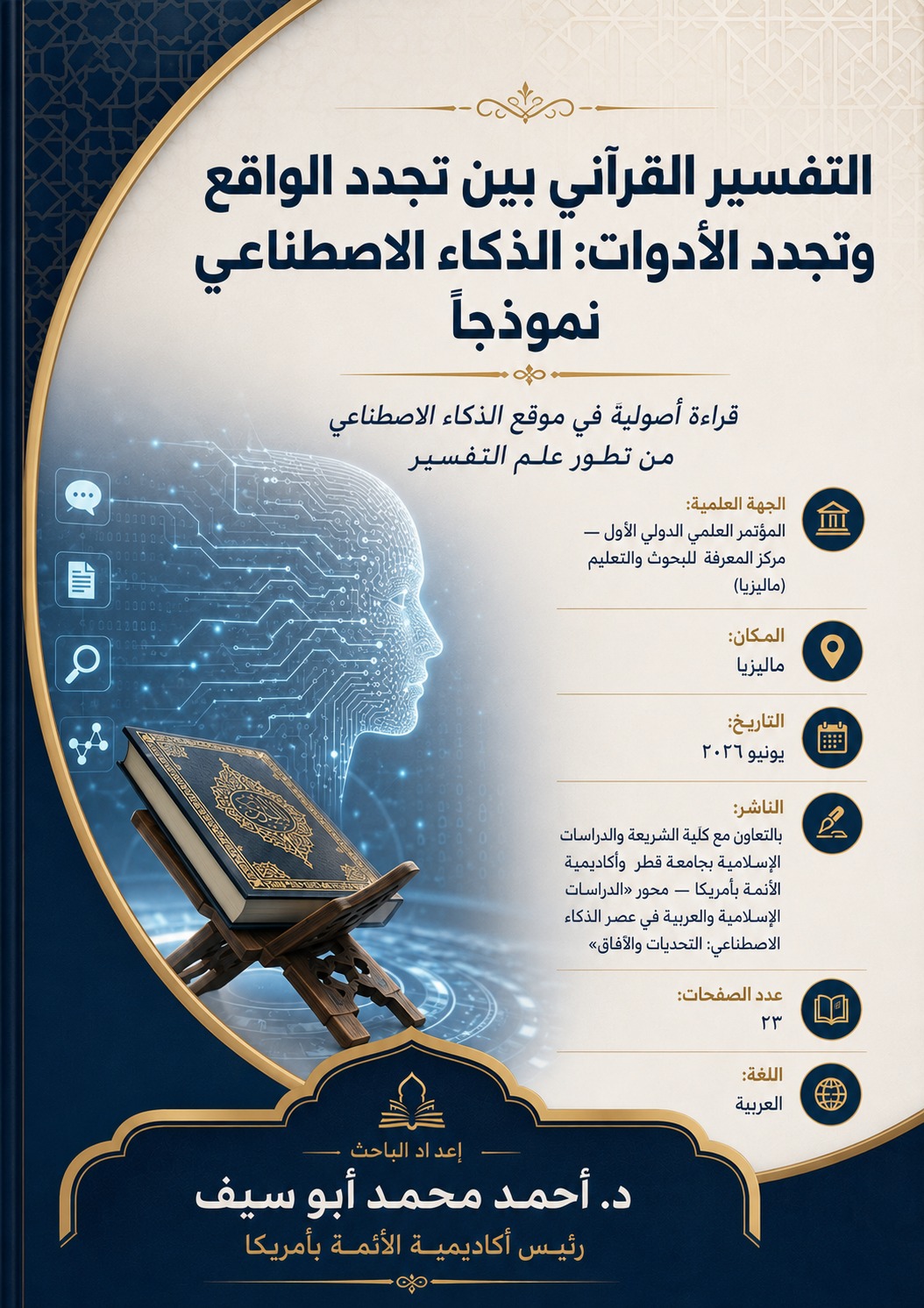
پہلی بین الاقوامی علمی کانفرنس — مرکز المعرفۃ للبحوث والتعلیم (ملائیشیا)
ملائیشیا
جون ۲۰۲۶ء
قطر یونیورسٹی کلیۂ شریعہ اور اسلامی علوم اور امریکن امامز اکیڈمی کے تعاون سے — محور: «مصنوعی ذہانت کے دور میں اسلامی و عربی علوم: چیلنجز اور آفاق»
28
عربی
تحقیق کا خلاصہ
یہ مقالہ ایک معرفتی سوال کو زیربحث لاتا ہے: کیا قرآنی تفسیر واقعیت اور معرفتی ابزار کی تجدید کے ساتھ تجدید کی صلاحیت رکھتی ہے، اور مصنوعی ذہانت اس مسار میں کہاں ہے؟ مقالہ تفسیر کی تاریخ کو متعاقب معرفتی ابزار — روایت، لغت، منطق، مقاصد، ادبی دراسات — کے استیعاب کی ایک سلسلہ کے طور پر پڑھنے کا منہج پیش کرتا ہے، پھر مصنوعی ذہانت کے سوال کو اس پر قیاساً اور اختباراً منطبق کرتا ہے۔ ایک مفاہیمی تجزیے اور ایک مسمّی لغوی ماڈل پر تطبیقی مثال کے ذریعے محقق اس نتیجے پر پہنچتا ہے کہ AI ایک معاون معرفتی ابزار ہے، نہ کہ متبادل مفسر۔ مقالہ ماڈلوں کی مخرجات میں احصائی خطأ اور زیفِ اسنادی کے درمیان تمیز کے لیے ایک اصولی معیار بھی فراہم کرتا ہے۔
مکمل متن
⏱ 24 منٹ مطالعہيطيب لي أن أتقدّم بخالص الشكر والتقدير للجنة المنظِّمة للمؤتمر — مركزِ المعرفة للبحوث والتعليم بماليزيا، وكليةِ الشريعة والدراسات الإسلامية بجامعة قطر، وأكاديميةِ الأئمة بأمريكا — على إتاحة فرصة المشاركة في هذا المحفل العلميّ.
وأَوُدُّ أن أُسجّل في هذا المقام أنّ إعدادَ هذه الورقة قد نبّهني إلى مشروعٍ بحثيٍّ أوسعَ أعتزم النهوضَ به، يكون مصنَّفاً مرجعياً في «تطوّر التفسير عبر أدوات المعرفة»؛ مشروعٌ لا يتقيّد بالذكاء الاصطناعي وحدَه وإن تطوّر، بل يجعله حلقةً واحدةً في سلسلة أدوات التجدّد، لا صانعاً للتفسير ولا مؤثّراً مستقلاً في حركته. فهذه الورقةُ نواةٌ لذلك المشروع، وأرجو أن تَجِد من الجهة العلمية المحكِّمة عنايةً وتبنّياً ومتابعةً لتطوّرها.
إفصاحٌ منهجيّ: الحالةُ التطبيقيةُ في المبحث الرابع أُجريت فعلياً على أربعةٍ من النماذج اللغوية الكبيرة (Claude، وGrok، وChatGPT، وGemini) بوصفها مادّةَ الدراسة وموضعَ الاختبار، ومخرجاتُها المثبتةُ في الورقة حقيقيةٌ قابلةٌ للتكرار.
مقدمة
الحمد لله الذي أنزل القرآن هدىً للناس، والصلاة والسلام على من بُعث معلّماً ومبيّناً، وبعد؛ فقد كان التفسيرُ على الدوام جسرَ الأمة إلى فهم كتابها، يتجدّد عطاؤه بتجدّد أسئلة الواقع وأدوات المعرفة مع ثبات النص وقطعيّاته. وفي عصرنا برز الذكاءُ الاصطناعيُّ أداةً معرفيةً جديدةً، فتجدّد السؤالُ القديمُ في صورةٍ جديدة: أين يقع من علاقة التفسير بأدوات كل عصر؟
ولأنّ هذا السؤال هو لبُّ محور المؤتمر — الدراسات الإسلامية في عصر الذكاء الاصطناعي — تتبنّى الورقةُ زاويةً تحليليةً قوامُها ثنائيةُ «تجدّد الواقع وتجدّد الأدوات»، وتجعل الذكاءَ الاصطناعيَّ نموذجاً تطبيقياً لتجدّد الأدوات. والمساهمةُ المركزيةُ للورقة منهجيةٌ: اقتراحُ منهجٍ لقراءة تاريخ التفسير عبر أدوات المعرفة، يكون فيه النقاشُ التقنيُّ حول الذكاء الاصطناعي تطبيقاً على المنهج واختباراً له، لا أصلاً يقوم عليه؛ فموضعُ الأصالة في المنهج التاريخيّ–المعرفيّ لا في الجانب التقنيّ المتغيّر؛ وهو منهجٌ يُقدَّم نواةً أولى لمشروعٍ أوسعَ في «تطوّر التفسير عبر أدوات المعرفة»، تكون فيه أداةُ كلِّ عصرٍ حلقةً في سلسلةٍ ممتدّة.
وتسير الورقةُ في تمهيدٍ يضع التعريف الإجرائيّ للتجدّد، ثم مبحثٍ في قابلية التفسير للتجدّد، فمبحثٍ في أنماط استيعاب أدوات المعرفة عبر العصور (مع فصلٍ تأسيسيٍّ موجزٍ في التحوّلات الكبرى)، فمبحثٍ ثالثٍ هو قلبُ الورقة في طبيعة الذكاء الاصطناعي ومعالجته المعرفية والأصولية، فمبحثٍ رابعٍ في الإطار التكامليّ مع حالةٍ توضيحيةٍ مطبَّقة، ثم خاتمةٍ وتوصيات.
مشكلة الورقة وأسئلتها
تكمن المشكلة في غياب قراءةٍ تأصيليةٍ تربط الذكاء الاصطناعي بمسار تجدّد أدوات التفسير، بدل القراءات التقنية المجزّأة. وأسئلتُها: ما مفهومُ التجدّد التفسيريّ وضوابطُه؟ وكيف استوعب التفسيرُ أدواتِ المعرفة عبر عصوره؟ وهل الذكاءُ الاصطناعيُّ أداةٌ معزِّزةٌ أم تحوّلٌ في بنية المعرفة؟ وما المعيارُ الأصوليُّ لقبول مخرجاته أو ردّها؟ وما ملامحُ الإطار التكامليّ بين المفسِّر والآلة؟
أهداف الورقة وأهميتها
تهدف الورقةُ إلى تأصيل مفهوم التجدّد، وقراءةِ تاريخ التفسير عبر أدوات المعرفة، وتحريرِ موقع الذكاء الاصطناعي منه، وبناءِ معيارٍ أصوليٍّ لمخرجاته، وصوغِ إطارٍ تكامليٍّ يحفظ مركزية المفسِّر ويُبرز البعد التربويّ. وتبرز أهميتُها في نقل النقاش من المستوى التقنيّ إلى المستوى المعرفيّ–الأصوليّ، وفي تزويد المؤسسات الشرعية والتعليمية بتصوّرٍ منضبطٍ لموقع الأداة الجديدة.
الدراسات السابقة
تتوزّع الدراساتُ على مسارات: مسارُ التجديد وتاريخ التفسير (الرابطة المحمدية للعلماء، ومركز تفسير للدراسات القرآنية)، ومسارٌ تقنيٌّ لمعالجة اللغة الطبيعية في الدراسات القرآنية، ومسارٌ شرعيٌّ ضابطٌ. ومن الإنتاج العربيّ المعاصر المتّصل ببيئة المؤتمر: قرارُ مجمع الفقه الإسلامي الدولي رقم 258 (3/26) بشأن «الذكاء الاصطناعي: أحكامه وضوابطه» الصادرُ في الدوحة 2025، إضافةً إلى بحوث أكاديمية الفتوى ودراسات الهلوسة والتحيّز.
وتأكيداً للاطّلاع على الحقل العالميّ، تُفيد الورقةُ من أدبيات الإنسانيات الرقمية وفلسفة التقنية: فجيروم مكغان في Radiant Textuality بحث أثرَ الوسائط الرقمية في نظرية النص وتأويله، وجوانّا دروكر ناقشت توتّر المنهج الحوسبيّ مع المقاربة الإنسانية، ودون آيدي أسّس «الهرمنيوطيقا المادية» في علاقة الإنسان بالتقنية بوصفها وسيطاً تأويلياً. وفي حقل الذكاء التفسيريّ القابل للتفسير (Explainable AI) بُحث توترُ الأمانة (Faithfulness) مع المعقولية في مخرجات النماذج، وقُيِّمت أمانةُ المحتوى الإسلاميّ المولَّد بأطرٍ وكيليةٍ تربط المخرجات بمراجعها.
وتُقارَن هذه التجاربُ بتجارب رقمنة النصوص المقدسة في تقاليد أخرى — كالدراسات الكتابية الرقمية ومنصّات النصوص اليهودية (سفاريا) ومشاريع فهرسة التلمود — مع تسجيل فارقٍ جوهريّ: فرقمنةُ النصوص في التقليدين اليهوديّ والنصرانيّ تعالج في جانبٍ منها أزمةَ غياب السند المتّصل عبر النقد النصّيّ الآليّ للمخطوطات المكتوبة وموازنةِ رواياتها؛ بينما عمادُ القرآن وعلومِ تفسيره الإسنادُ الشفهيُّ المتّصلُ والملكةُ المأخوذةُ بالتلقّي والإجازة. وتأتي هذه الورقةُ لتجمع التاريخَ والتقنية في منهجٍ واحدٍ أقوى مساهماته «قراءة التفسير عبر أدوات المعرفة».
منهج الورقة وحدودها
وتُقدَّم هذه الورقةُ بوصفها النواةَ المنهجيةَ الأولى لمشروعٍ بحثيٍّ مرجعيٍّ أوسعَ في «تطوّر التفسير عبر أدوات المعرفة» يعتزم الباحثُ النهوضَ به، يجعل الذكاءَ الاصطناعيَّ حلقةً واحدةً في سلسلة أدوات التجدّد لا صانعاً للتفسير ولا مؤثّراً مستقلاً في حركته؛ وقد اقتضى هذا الأفقُ بناءَ منهجيةٍ تكامليةٍ قابلةٍ للتوسّع تتجاوز حدودَ ورقة المؤتمر الواحدة، مع التزامٍ صريحٍ بحدودها في التطبيق الحاليّ. فسعةُ المنهج على حجم الورقة ليست تكلّفاً، بل تأسيسٌ مقصودٌ لِما هو أوسع، وهذه الورقةُ مرحلتُه التأسيسية.
تعتمد الورقةُ منهجاً تأصيلياً تكاملياً ذا طبقاتٍ أربعٍ متمايزةِ الوظيفة: (١) منهجٌ وصفيٌّ–تحليليٌّ لتحرير المفاهيم المركزية (التجدّد، والأداة المعرفية، وإنتاج المعرفة) وتحليلِ طبيعة الذكاء الاصطناعي؛ (٢) منهجٌ استقرائيٌّ عبر عيّنةٍ قصديّةٍ ممثِّلةٍ من أعلام التفسير لقراءة كيفية استيعابه أدواتِ المعرفة عبر أطواره؛ (٣) منهجٌ تأصيليٌّ أصوليٌّ لاشتقاق معيار قبول مخرجات النماذج وردِّها وتكييفِها الفقهيّ؛ (٤) منهجٌ مقارنٌ يقابل الذكاءَ الاصطناعيَّ بالأدوات السابقة وبتجارب التقاليد الأخرى؛ وتُسنَد هذه الطبقاتُ جميعاً إلى دراسة حالةٍ توضيحيةٍ مطبَّقة. وتُمايِز الورقةُ صراحةً بين طبقتها الوصفية (وصفِ ما جرى تاريخياً) وطبقتها المعيارية الأصولية (الحكمِ على المخرجات)، فلا يختلط الوصفُ بالحكم.
وأمّا العيّنةُ التاريخيةُ فهي عيّنةٌ قصديّةٌ ممثِّلة، اختيرت بمعاييرَ معلَنة: أن يمثّل العَلَمُ طوراً استوعب فيه التفسيرُ أداةً معرفيةً كبرى (الروايةَ، فاللغةَ والبلاغةَ، فالمنطقَ، فالمقاصدَ، فمناهجَ الدرس الأدبيّ)؛ وأن يكون مُقدَّماً متّفقاً على إمامته في مدرسته؛ وأن يكون أثرُه في النقلة المعرفية لتلك الأداة مشهوداً مدوَّناً. وبهذه المعايير يكون الانتقاءُ مسوَّغاً منهجياً لا اعتباطياً، ويكون استخلاصُ النمط منه استدلالاً منضبطاً لا انتقاءً للشواهد الموافِقة.
والنمطُ الذي تستخلصه الورقةُ من تعاقب الأطوار نموذجٌ مثاليّ لا قانونٌ تاريخيٌّ حتميّ؛ مردُّه استقراءٌ ناقصٌ يفيد الترجيحَ لا القطع، ووظيفتُه أن يكون أداةً حِجاجيةً تُقرأ بها مواقعُ الأدوات المستجدّة. وبه تَغدو الأطروحةُ قابلةً للاختبار: فموقعُ الذكاء الاصطناعي — معزِّزاً كان أم محوِّلاً للبنية — مرهونٌ بمؤشّرين ظاهرين: أن تُتلقّى مخرجاتُه قولاً تفسيرياً مستقلاً بلا مراجعةِ عالِمٍ مؤهَّل، وأن تنتقل سلطةُ التصديق من العالِم إلى النظام. فإن تخلّفا فهي أداةٌ معزِّزة، وإن تحقّقا فهو تحوّلٌ بنيويّ؛ وبذلك يتحدّد لها شرطُ صدقٍ وشرطُ كذب.
وتسير الورقةُ في خطواتٍ إجرائيةٍ متتابعة: تحريرُ المفهوم، ثم استقراءُ العيّنة القصدية، ثم استخلاصُ النموذج المثاليّ، ثم تنزيلُ سؤال الذكاء الاصطناعي على النموذج قياساً واختباراً، ثم التأصيلُ الأصوليُّ لمعيار المخرجات، ثم اختبارُ ذلك كلِّه بحالةٍ توضيحيةٍ تُطبَّق عليها معاييرُ مقارنةٌ محرَّرةٌ تعريفاً إجرائياً.
وحدودُ الورقة طبيعيةُ ورقة مؤتمرٍ: تقتصر على التفسير وعلوم القرآن من حيث صلتُهما بأدوات المعرفة، وعلى الذكاء الاصطناعي من حيث أثرُه المعرفيّ لا تفصيلُه الهندسيّ، وعلى عيّنةٍ توضيحيةٍ من ثلاث آياتٍ وعددٍ محدودٍ من النماذج اللغوية المسمّاة. وتصريحاً بمواضع القوة والقصور: الشواهدُ التاريخيةُ عيّنةٌ قصديّةٌ ممثِّلةٌ لا استقراءٌ تامّ، والحالةُ التطبيقيةُ مؤشّرٌ كاشفٌ لا أساسٌ لتعميمٍ إحصائيّ؛ وهي حدودٌ مناسبةٌ لحجم الورقة، تُبقي الأطروحةَ متوازنةً مع دليلها.
التمهيد: التفسير بين الثبات والتجدّد
القرآن كلامُ الله المحفوظ بقوله: ﴿إِنَّا نَحْنُ نَزَّلْنَا الذِّكْرَ وَإِنَّا لَهُ لَحَافِظُونَ﴾؛ فثبت بذلك نصُّه، وتجدّد فهمُ الناس له بتجدّد أدوات النظر وأسئلة الواقع. فالتفسيرُ إذاً ميدانٌ يلتقي فيه ثباتُ المصدر وقطعيّاتِه بتغيُّر المناهج وزوايا النظر؛ وهذه الثنائيةُ أحدُ أسرار بقائه حيّاً متجدّد العطاء دون مساسٍ بالنص.
التعريف الإجرائي للتجدّد التفسيري
يُقصد بالتجدّد التفسيريّ: إنتاجُ فهمٍ جديدٍ للنص الثابت باستيعاب أداةٍ معرفيةٍ مستجدّةٍ أو استجابةً لسؤالٍ واقعيٍّ جديد، مع الاتصال بأصول الاستنباط وعدم مصادمة القطعيّ. وتمييزاً له عمّا يجاوره: فـالاختلافُ تعدّدٌ أفقيٌّ في الأقوال دون ترقٍّ في الأداة؛ والتطوّرُ تراكمٌ تاريخيٌّ هو وعاءُ التجدّد؛ والانحرافُ خروجٌ عن الأصول أو مصادمةٌ للقطعيّ بدعوى التجديد. وقد حرّر شُرّاحُ حديث التجديد المفهومَ بأنه إحياءُ ما اندرس من فهم الكتاب والسنّة لا تبديلُ الأصول، وعليه فالتعريفُ الإجرائيُّ هنا امتدادٌ منضبطٌ لتحريرات السابقين.
وبهذا الضابط يُفصَل في مسائلَ مشكِلة؛ ومنها التفسيرُ الإشاريُّ (الصوفيّ): فما وافق منه ظاهرَ اللفظ ولم يصادم محكماً وكان للّفظ به احتمالٌ، فهو إشارةٌ مقبولةٌ من باب التجدّد لا تفسيرٌ يُدّعى أنه المرادُ الأوحد؛ وما صادم الظاهرَ أو القطعيَّ أو ادّعى الحصرَ فهو من الانحراف. فالضابطُ واحدٌ يُطبَّق على القديم والجديد سواء.
المبحث الأول: قابلية التفسير للتجدّد
التفسيرُ لغةً من الفَسْر، وهو الكشفُ والإبانة. واصطلاحاً عرّفه الزركشيُّ بأنه «علمٌ يُعرَف به فهمُ كتاب الله المنزَّل على نبيّه محمد ﷺ، وبيانُ معانيه، واستخراجُ أحكامه وحِكَمه»، وعرّفه أبو حيّان بأنه «علمٌ يُبحَث فيه عن كيفية النطق بألفاظ القرآن ومدلولاتها وأحكامها الإفرادية والتركيبية ومعانيها التي تُحمَل عليها حالةَ التركيب»، وهو حدٌّ يَعدّه الباحثُ من أجمع الحدود لاشتماله على اللفظ ودلالته وحكمه ومعناه التركيبيّ.
والمتأمّلُ يلحظ أنّ هذه الحدود تُقيم التفسيرَ على فعلٍ بشريٍّ متجدّدٍ: فهمٌ وبيانٌ واستخراج، تتفاوت بتفاوت آلة الفاهم وأدوات عصره؛ فـقابليةُ التفسير للتجدّد كامنةٌ في حقيقته لا طارئةٌ عليه. ويعزّزه التفريقُ بين التفسير والتأويل، إذ بابُ ترجيح المحتملات بابٌ مفتوحٌ لتجدّد النظر ما دام منضبطاً بالأصول.
وأسبابُ التجدّد ثلاثةٌ متضافرة: تجدّدُ الوقائع التي تطرح أسئلةً جديدة، وتطوّرُ العلوم التي تُمدّ التفسيرَ بأدوات، وتغيّرُ أدوات المعرفة ووسائطِها — وهو محور الورقة. وهنا يلزم تمييزٌ دقيق: فثَمّ وسيلةٌ تقنيةٌ تنقل وتحفظ دون أثرٍ في الفهم، وثَمّ أداةٌ معرفيةٌ تتوسّط في إدراك المعنى وتنظيمه فتغيّر طريقةَ الوصول إلى النص أو التفكير فيه. وبهذا المعيار يُعَدّ المنطقُ والطباعةُ والذكاءُ الاصطناعيُّ من جنس الأدوات المعرفية. ومعيارُ «الأداة المؤثّرة» أن تُغيّر طريقةَ الوصول إلى النص أو تنظيمَه، أو تُوسّع طاقةَ المفسِّر في المعالجة، أو تُدخل زاويةَ نظرٍ جديدةً، دون مساسٍ بالنص؛ وعليه يُقاس الذكاءُ الاصطناعيُّ في المبحث الثالث.
المبحث الثاني: أنماط استيعاب أدوات المعرفة عبر العصور
لا يُقصد سردُ التاريخ بل تحليلُ كيف استوعب التفسيرُ في كل طورٍ أداةَ المعرفة الجديدة. والأعلامُ شواهدُ تمثيليةٌ منتقاةٌ لا استقراءٌ تامّ، ويُختم كلُّ نمطٍ بالسؤال: ما الأداةُ التي استوعبها هذا الطور؟
النمط الروائيّ (أداة الرواية والإسناد)
مناطُ الاستشهاد هنا أنّ الترجيح صار عند الإمام الطبريّ صنعةً منهجيةً منضبطةً بمعايير، لا مجرّد جمعٍ للأقوال. فهو يَسوق المرويَّ بأسانيده ثم يحسم بصيغته اللازمة: «وأَولى الأقوال في ذلك بالصواب…»، ويُعلّل اختيارَه بأصولٍ مرتّبة. وقد استقرأت دراسةٌ علميةٌ ترجيحاتِه فوجدت أنّ أكثرَ ما يستند إليه: «إجماعُ الحجة من أهل التأويل، ثم دلالةُ سياق الآيات، ثم المعروفُ المستفيض في لغة العرب»، وهذا التراتبُ في أدوات الترجيح هو عينُ النقلة المعرفية: تحويلُ التفسير من نقلٍ إلى نقدٍ وموازنةٍ بمعيار. فالأداة المستوعَبة: الروايةُ والإسنادُ ونقدُ المنقول.
النمط اللغويّ–البلاغيّ (أداة اللغة والبلاغة)
ومناطُ الاستشهاد أنّ الإمام الزمخشريَّ يُولّد المعنى من البلاغة لا يَصِفها فحسب. فعند قوله تعالى ﴿إِيَّاكَ نَعْبُدُ﴾ يقف على الالتفات من الغيبة إلى الخطاب فيقول ما حاصلُه: إنّه لمّا أُجريَت على الله صفاتُ الحمد والربوبية والرحمة والمُلك، «تعلّق العلمُ بمعلومٍ عظيم الشأن، فخوطب ذلك المعلومُ المتميِّز بتلك الصفات، فقيل: إيّاك نخصُّ بالعبادة، لتكون العبادةُ أدلَّ على اختصاصه بالاستحقاق»، فالبلاغةُ هنا أداةُ كشفٍ عن سرِّ الخطاب، وهي النقلةُ المعرفية. فالأداة المستوعَبة: اللغةُ والبلاغة.
النمط الكلاميّ–الفلسفيّ (أداة المنطق والنظر العقليّ)
ومناطُ الاستشهاد أنّ الرازيَّ نقل التفسيرَ إلى بناءٍ استدلاليٍّ على هيئة «مسائل» تُفرَّع وتُناقَش بأدوات المنطق، حتى إنّه عند الاستعاذة والبسملة عقد عشراتِ المسائل في مباحثَ لغويةٍ وعقليةٍ متدرّجة، فهذا التنظيمُ «المسائليُّ» أداةٌ معرفيةٌ في هندسة النظر، نافعةٌ متى انضبطت بالأصول، منقودةٌ متى استطالت المقدّماتُ الفلسفيةُ على دلالة النص. فالأداة المستوعَبة: المنطقُ والنظرُ العقليّ.
النمط المقاصديّ–الإصلاحيّ (أداة المقاصد والنظر الاجتماعيّ)
ومناطُ الاستشهاد أنّ ابن عاشور قدّم بين يدي تفسيره «عشرَ مقدماتٍ» تأصيليةً جعل منها أداةً ناظمةً سابقةً على التطبيق، ونصّ على أنّ من أهمّ أغراض المفسِّر بيانَ «ما تتضمّنه الآياتُ من المقاصد والحِكَم»، وبنى تفسيرَه على نظرية النظم، فجَعْلُ المقاصد والنظم إطاراً حاكماً للتفسير هو النقلةُ المعرفية في هذا الطور. فالأداة المستوعَبة: المقاصدُ والنظرُ الاجتماعيّ الناشئ.
النمط الأدبيّ–الموضوعيّ (أداة مناهج الدراسات الأدبية والتفسير الموضوعيّ)
ومناطُ الاستشهاد أنّ هذا الطور صرّح بأداته المنهجية تصريحاً. فأمين الخولي أصّل «التفسير الأدبيّ» وجعل أوّلَ خطواته دراسةَ القرآن «دراسةً أدبيةً» يُتناول فيها النصُّ بوصفه نصاً عربياً بيانياً قبل كل شيء، وبنت الشاطئ طبّقت ذلك في «التفسير البياني» على أسسٍ منهجيةٍ صريحة، منها: التناولُ الموضوعيُّ بجمع كل ما في القرآن من النظير، وتلمُّسُ دلالة اللفظ بالاستقراء في القرآن كلِّه، وجعلُ سياق القرآن حاكماً، ودرّاز في «النبأ العظيم» برهن على دقة النظم القرآنيّ وإحكام تناسبه، ويُذكر سيّد قطب صيغةً حركيةً–أدبيةً من النمط («التصوير الفنّي» مع البُعد الحركيّ) لا النموذجَ الوحيد له، فالتصريحُ بأخذ النص بمناهج الدرس الأدبيّ الحديث هو النقلةُ المعرفية. فالأداة المستوعَبة: مناهجُ الدراسات الأدبية والتفسيرُ الموضوعيّ.
التحليل المقارن
تكشف هذه الشواهدُ نمطاً متكرّراً — لا قانوناً حتمياً — في أربع مراحل: ظهورُ أداةٍ ونضجُها، فاختبارُها على الأصول قبولاً أو ردّاً، فاستيعابُها بما يَخدم الفهم، فرسوخُها في عُدّة التفسير. والمتغيّرُ الأداةُ وزاويةُ النظر، لا النصُّ ولا هذا النمط؛ وهذا الاستخلاصُ لبُّ مساهمة الورقة، ويجعل النظرَ في الذكاء الاصطناعي مؤسَّساً على فرضيةٍ قابلةٍ للاختبار.
الفصل التأسيسي الموجز: التحوّلات المعرفية الكبرى
يضع هذا الفصلُ الذكاءَ الاصطناعيَّ في سلسلةٍ مفهومة: فالكتابةُ والتدوينُ ثبّتا المتون ومكّنا المراجعةَ والنقد؛ والطباعةُ وسّعت الإتاحةَ ونمّطت المتون وغيّرت سلطةَ النشر؛ والفهارسُ والموسوعاتُ نظّمت المعرفةَ ويسّرت الوصول؛ والحاسوبُ والمكتباتُ الرقمية أدخلا البحثَ الآليَّ ووسّعا طاقةَ المقارنة؛ والإنترنتُ زعزع مركزيةَ سلطة النشر والتلقّي. وكلُّها أدواتٌ معرفيةٌ بقيت طوعَ العالِم؛ ويبقى السؤالُ: هل الذكاءُ الاصطناعيُّ التوليديُّ حلقةٌ على جنسها، أم يتجاوزه إلى ما يمسّ بنيةَ تولّد المعرفة؟ وذلك مبحثُ المبحث الثالث.
المبحث الثالث: الذكاء الاصطناعي — أداةٌ معزِّزة أم تحوّلٌ بنيويّ؟
هذا البابُ قلبُ الورقة، ويُعالَج فيه السؤالُ المعرفيُّ الأعمق معالجةً موسَّعةً تتناسب مع محور المؤتمر.
من الأداة إلى البنية: تمييزٌ مفهوميّ
الأداةُ المؤثّرةُ تَعمل داخل البنية القائمة فتوسّعها مع بقاء العالِم مركزَ الحكم؛ والتحوّلُ البنيويُّ يَمسّ البنيةَ ذاتَها: مَن يُنتج المعرفة، وكيف تُكتسب الثقةُ بها، وأين تستقرّ سلطةُ التصديق. والميزانُ: أتبقى الأداةُ طوعَ العالِم، أم تنتقل إلى موقعٍ يُنتج قولاً يُتلقّى مستقلاً عن وساطته؟
تحرير مفهوم إنتاج المعرفة
للمفهوم مستوياتٌ أربعة: الإنتاجُ (توليدُ معرفةٍ صادقةٍ جديدةٍ بفهمٍ وقصد)، والتركيبُ (إعادةُ ترتيب المعلوم)، والاسترجاعُ (استدعاءُ المخزون)، والمحاكاةُ (صورةٌ لفظيةٌ تُشبه المعرفةَ دون فهمٍ أو صدقٍ مرجعيّ). وهذا التحريرُ يَقي من عدّ كل مخرجٍ «معرفةً» لمجرّد ورودِه في صورة الكلام العالِم.
طبيعة النماذج اللغوية الكبيرة
تقوم هذه النماذجُ على التنبّؤ الاحتماليّ بالكلمة التالية وفق أنماطٍ إحصائية، فتختار الأرجحَ إحصائياً لا الأصدقَ مرجعياً؛ وعبّر تيارٌ نقديٌّ عن ذلك بـ«الببغاء العشوائيّ»، مع ردٍّ يرى أنّ اختزالها في «التنبّؤ» يُغفِل قدراتٍ أعقد. وموضعُ الاتفاق الكافي: أنها بلا مرجعٍ خارجيٍّ ذاتيٍّ للحقيقة ولا قصدٍ، فتقع في «الهلوسة»؛ وقد بُحث توترُ الأمانة (Faithfulness) والمعقولية في مخرجاتها ضمن أدبيات الذكاء القابل للتفسير.
أثر التحوّل على بنية المعرفة الشرعية
ينعكس هذا التحوّل على ثلاثة مواضع: سلطةُ التصديق (تقديمُ قولٍ بلا إسنادٍ ولا أهلية)، وآليةُ التحقّق (اختلاطُ الصحيح بالمُهَلوَس في ثقةٍ ظاهريةٍ واحدة)، وموقعُ العالِم (انزلاقُه من منتِجٍ مسؤولٍ إلى مراجعٍ لمخرجات). وهذه أَولى بالعناية لأنها تمسّ بنيةَ الثقة في العلم.
خصوصية الإسناد والتلقّي: حائط صدٍّ أمام السيولة الرقمية
ممّا يميّز المعرفةَ الشرعيةَ ويصونها من السيولة الرقمية أنّ عمادها ليس النصَّ المكتوبَ وحدَه، بل بنيةُ التلقّي المشافهةِ والإجازةِ العلمية؛ فالقرآن أُخذ بالتلقّي المتواتر، وعلومُه ومَلَكةُ التفسير تُكتسب بصحبة العلماء والسماع والإجازة لا بمجرّد قراءة المتون. والذكاءُ الاصطناعيُّ — مهما اتّسعت مدوّناتُه — يعجز عن محاكاة هذه البنية؛ لأنها ليست بياناتٍ نصّيةً تُعالَج، بل علاقةُ تلقٍّ وتزكيةٍ وملَكةٍ تنتقل بين الأشخاص. وبهذا تكون بنيةُ التلقّي والإجازة حائطَ صدٍّ يحمي صميمَ المعرفة الشرعية من أن يُختزل في مخرجاتٍ رقميةٍ منقطعةِ السند، ويُبقي للأهلية والإسناد موقعَهما الذي لا تبلغه الآلة.
الهلوسة من منظور أصوليّ: الخطأ الإحصائيّ والزيف الإسناديّ
يلزم التمييزُ شرعياً بين أمرين: الخطأ الإحصائيّ وهو لازمُ طبيعة التنبّؤ الاحتماليّ، لا قصدَ فيه؛ والزيف الإسناديّ وهو أن يولّد النموذجُ نسبةً (آيةً أو حديثاً أو قولَ مفسّرٍ) لا أصلَ لها. والآلةُ وإن انتفى عنها «الكذب» بالمعنى الأخلاقيّ لانتفاء القصد، فإنّ اعتمادَ العالِم لهذا الزيف ونشرَه يدخل في «القول على الله بلا علم» و«الكذب على رسوله» المنهيِّ عنه أشدَّ النهي. ومحاكاةُ صورة الإسناد ليست إسناداً؛ لأنّ الإسناد توثيقٌ تاريخيٌّ لطريق النقل لا صياغةٌ لفظيةٌ تُحاكي شكله.
ومن ثَمّ يُقترح معيارٌ أصوليٌّ لقبول مخرجات النموذج أو ردّها: فلا يُقبل ما تضمّن نسبةً إلى الشرع إلا بعد التحقّق من المصدر الأصليّ. والتكييفُ الأدقّ لهذه المخرجات أنها أشبهُ بـالوِجادة غير الموثَّقة — أي ما يجده الناظرُ مكتوباً بلا سندٍ متّصلٍ ولا سماعٍ — فيُستأنس به ولا يُحتجّ به حتى يُسنَد إلى أصلٍ موثَّق. وأمّا تنزيلُها منزلةَ «خبر مجهول الحال» فإنما يصحّ من حيث الإجراءُ العمليُّ (التوقّف والتحرّي) لا من حيث العلّةُ الإسنادية؛ لأنّ مجهولَ الحال آدميٌّ مكلَّفٌ يصحّ منه الصدقُ والكذبُ وعلّةُ التوقّف جهالةُ عدالته، أمّا الآلةُ فجمادٌ غيرُ مكلَّفٍ ومخرجاتُها توليدٌ إحصائيٌّ لا إخبار، فلا توصف بعدالةٍ ولا جرح. ويقرّبه قياسٌ مساعدٌ على سهو الحافظ؛ فكما لا يُحتجّ بما تطرّق إليه احتمالُ الوهم حتى يُتثبَّت منه، فكذلك مخرجاتُ النموذج. فالأصلُ فيها التوقّفُ حتى التوثيق لا القبولُ حتى التكذيب.
مسألتان نقديتان: «الاجتهاد الآليّ» والتحيّز الكامن
لا يصحّ — في تقدير الورقة — إطلاقُ «اجتهاد» على مخرجات النموذج بالمعنى الشرعيّ؛ لأنّ الاجتهاد بذلُ الوُسع من أهلٍ مكلَّفٍ قاصدٍ متحمّلٍ للتبعة، والآلةُ لا قصدَ لها ولا أهليةَ ولا تكليف؛ فالأدقُّ تسميتُها «توليداً آلياً» لا «اجتهاداً آلياً». وأمّا التحيّزُ الكامن فخطرٌ حقيقيٌّ في نماذجَ غُذّيت ببياناتٍ غالبُها غيرُ إسلاميٍّ أو مترجَم؛ إذ تَحمل مسبقاتٍ دلاليةً وثقافيةً قد تنعكس على التراكيب التفسيرية (كاختيار المقابلات اللفظية وترجيحِ معانٍ تخالف اصطلاح الشرع)؛ وهو يقتضي بناءَ نماذجَ مخصّصةٍ على مدوّناتٍ تفسيريةٍ موثّقةٍ، ومراجعةَ المتخصّصين، وعدمَ التسليم بحياد الأداة.
مأزق الصندوق الأسود والنماذج الاحتكارية
ثَمّ خطرٌ معرفيٌّ أعمقُ من الهلوسة والتحيّز المفردين: وهو أنّ النماذج المغلقة المصدر (Proprietary) الخاضعةَ لفلاترَ تجاريةٍ وضبطٍ سلوكيٍّ (Alignment) تُجريه شركاتٌ غيرُ إسلاميةٍ وفق قيمها ومصالحها، تمثّل صندوقاً أسودَ لا تُعرَف معاييرُ ترجيحه ولا مصادرُ تهذيبه؛ فإذا تسرّبت مخرجاتُه إلى المعرفة الشرعية صار جزءٌ من سلطة التصديق فيها رهيناً بقراراتٍ تجاريةٍ خارجةٍ عن الأهلية الشرعية. ومن ثَمّ فإنّ الانتقال من عتبة «الأداة المعزِّزة» إلى «التحوّل البنيويّ الآمن» مشروطٌ ببناء نماذجَ إسلاميةٍ مفتوحةِ المصدر، تُبنى وتُهذَّب وتُراجَع داخل بيئاتٍ علميةٍ شرعية، يكون فيها معيارُ الضبط والتصديق بيد أهل العلم لا بيد المزوِّد التجاريّ.
الترجيح: تحوّلٌ محتملٌ مرهونٌ بشروط
بعرض الذكاء الاصطناعي على المعيار يظهر — في إمكانه البنيويّ لا في واقع نماذجه التجارية الحالية — أنّه قادرٌ على أن يكون أداةً معرفيةً معزِّزةً تنتسب إلى مسار التجدّد (بتغيير الوصول والتنظيم، وتوسيع المعالجة، وإمكان إدخال زاوية نظر)؛ أمّا مخرجاتُ النماذج العامة الراهنة فما تزال دون هذه العتبة كما تُبيّنه الحالةُ التطبيقيةُ الآتية. ويُوحَّد الموقفُ من دعوى «التحوّل البنيويّ» على أنه تحوّلٌ محتملٌ مرهونٌ بشروط لا واقعٌ حتميٌّ ولا منفيٌّ بإطلاق. وعتبةُ التحوّل أن يتحقّق شرطان: أن تُتلقّى مخرجاتُه بوصفها قولاً تفسيرياً مستقلاً يُعتمد بلا مراجعة عالِمٍ مؤهَّل، وأن تنتقل سلطةُ التصديق من العالِم إلى النظام. فدون هاتين العتبتين يبقى أداةً معزِّزةً (امتداداً للتجدّد)، وعندهما يصير تحوّلاً بنيوياً يمسّ موقعَ إنتاج المعرفة (مظِنّةَ انقطاع). فالعبرةُ بموقعه من المعادلة لا بذاته.
المبحث الرابع: الإطار التكاملي وحالة توضيحية
بعد أن تقرّر أنّ الأداة معزِّزةٌ بشرط حفظ مركزية المفسِّر، يُبنى الإطار العمليّ: فالآلةُ تُحسن المعالجةَ والفهرسةَ والبحثَ الدلاليَّ وجمعَ الأقوال والموازنةَ والترجمة (وظائفُ خدمة)، وتعجز عن إدراك مقاصد الشريعة، والوقوفِ على قصد المتكلِّم (المعنى المراد)، والأهليةِ والمسؤوليةِ والحسِّ الإيمانيّ (صميمُ التفسير). ومن ثَمّ تتقرّر مركزيةُ المفسِّر: الأداةُ تُعين ولا تَحكُم، وتَعرِض ولا تُلزِم.
حالة توضيحية مطبَّقة: ثلاث آيات
هذه حالةٌ توضيحيةٌ واحدة — مؤشّرٌ لا أساسٌ لتعميمٍ إحصائيّ — طُبِّقت فعلياً على ثلاث آيات: ﴿وَمَا خَلَقْتُ الْجِنَّ وَالْإِنْسَ إِلَّا لِيَعْبُدُونِ﴾ (الذاريات: 56)، ﴿اللَّهُ الصَّمَدُ﴾ (الإخلاص: 2)، ﴿إِنِّي جَاعِلٌ فِي الْأَرْضِ خَلِيفَةً﴾ (البقرة: 30). والنموذجُ المستخدمُ فعلياً: Claude (من شركة Anthropic)، إصدار Opus، بتاريخ يونيو 2026. والأمرُ (Prompt) الموجَّه إليه نصُّه: «فسِّر قوله تعالى [الآية] تفسيراً موجزاً، مبيّناً أقوال المفسّرين فيها». وهذه مخرجاتٌ حقيقيةٌ من النموذج المذكور بالأمر المذكور، تُستعمل حالةً توضيحيةً، وهي قابلةٌ للتكرار بإعادة الأمر نفسِه على النموذج نفسِه (مع تنبيهٍ إلى أنّ مخرجات النماذج قد تتغيّر بتغيّر الإصدار أو ضبط المعامِلات).
مخرجات النموذج (Claude) موجزةً: في الذاريات 56: «الغايةُ من خلق الجن والإنس عبادةُ الله وحده، و﴿ليعبدون﴾ أي ليوحّدوني، واللام للتعليل عند الجمهور». وفي الإخلاص 2: «الصمدُ هو السيد المقصود في الحوائج، الغنيُّ عمّا سواه، وقيل الذي لا جوف له، وقيل الباقي». وفي البقرة 30: «الخليفة آدمُ ومن بعده يخلف بعضُهم بعضاً في عمارة الأرض وتنفيذ أمر الله، وفيه تكريمٌ واستخلافٌ بمسؤولية». وهي مخرجاتٌ تجمع المعنى العامَّ في صياغةٍ سلسةٍ دون عزوٍ مُسنَدٍ دقيقٍ ولا ترجيحٍ مؤصَّل.
وبمقابلتها بأقوال المفسّرين المحقَّقة: عند الطبري نقلُ الأقوال بالأسانيد وترجيحٌ (في الذاريات: العبادة والتذلّل؛ وفي الصمد: تعدّدُ أقوال السلف؛ وفي خليفة: التعاقبُ في عمارة الأرض)، وعند ابن عاشور تحليلٌ لغويٌّ–مقاصديّ (اللام للتعليل؛ والصمدُ السيدُ المقصود؛ والاستخلافُ وعمارةُ الأرض).
ولتقويم المخرجات ومقابلتها بالتفاسير المحقَّقة، طُبِّقت خمسةُ معاييرَ مُعرَّفةٍ تعريفاً إجرائياً، يُقوَّم الأوّلُ منها كمّياً وتُقوَّم البقيةُ على سُلّمٍ رتبيٍّ ثلاثيّ (عالٍ، متوسط، ظاهريّ/ضعيف): (١) دقّةُ نقل الأقوال: نسبةُ الأقوال المعزوّة إلى مصدرٍ محقَّقٍ أو سندٍ متّصلٍ من جملة الأقوال المنقولة في النص. (٢) الاتصالُ بالأصول: مدى إمكان تتبُّع طريقِ استخراج المعنى عبر أصلٍ استنباطيٍّ معتبَر — روايةٍ أو لغةٍ أو سياقٍ أو مقاصدَ أو قاعدةٍ أصولية — تصريحاً أو ضمناً منضبطاً. (٣) عمقُ المعنى: مستوى ربط الدلالة الظاهرة بالطبقات اللغوية والسياقية والمقاصدية الأوسع، مع بيان وجه الترجيح أو التعليل عند تعدّد الاحتمالات. (٤) الاتساقُ: خلوُّ النص من التناقض الداخليّ، وسلامةُ تركيبه اللغويِّ والمنطقيِّ بحيث يكون وحدةً معنويةً مترابطة. (٥) مواطنُ الإضافة/الهلوسة: ورودُ نسبةٍ أو معلومةٍ أو معنىً لا أصلَ له في المصادر المعتمدة، أو خلطٌ بين الأقوال، أو إضافةُ معنىً لا تدلّ عليه الآيةُ لغةً أو سياقاً؛ مع التمييز بين الإضافة المفيدة المسنَدة والهلوسة غير المسنَدة.
ويُبيّن الجدولُ (١) الآتي تطبيقَ المعايير الخمسة على التفاسير المحقَّقة ومخرجاتِ النموذج:
| المعيار | الطبري (المأثور) | ابن عاشور (اللغوي–المقاصدي) | نموذج Claude |
|---|---|---|---|
| دقّة نقل الأقوال | عالية؛ ينقل الأقوال بأسانيدَ محقَّقة | عالية؛ يحرّر الأقوال تحريراً لغوياً دقيقاً | متوسطة؛ يورد أقوالاً عامّةً دون عزوٍ مُسنَد |
| الاتصال بالأصول | وثيق؛ يستند إلى الرواية والإسناد | وثيق؛ يستند إلى اللغة والمقاصد والنظم | ظاهريّ؛ يفتقر إلى منهجٍ استنباطيٍّ مُلزِم |
| عمق المعنى | عميقٌ روائياً وسياقياً | عميقٌ لغوياً ومقاصدياً | تلخيصيٌّ سطحيّ؛ يقتصر على المعنى العامّ |
| الاتساق | جيد؛ مترابطٌ منهجياً | جيد؛ مترابطٌ لغوياً ومنطقياً | جيدٌ ظاهرياً وسلسٌ لغوياً |
| مواطن الإضافة/الهلوسة | منضبط؛ لا يخرج عن المصادر المحقَّقة | منضبط؛ ملتزمٌ بالنص والسياق | محتمَلُ الخلطِ أو العزوِ غير المحقَّق |
ودلالةُ الحالة (لا بوصفها تعميماً): النموذجُ يُحسن التلخيصَ والإحاطةَ والصياغة، ويَقصُر عن دقة العزو الإسناديّ وعمقِ التأصيل والترجيح، ويبقى عرضةً للزيف الإسناديّ.
قيدٌ منهجيٌّ مهمّ (سدّاً لفجوة القياس): وصفُ الذكاء الاصطناعي في هذه الورقة بـ«المعزِّز» ينصرف إلى إمكاناته البنيوية الكامنة وطاقته الاستيعابية بوصفه جنساً من أدوات المعرفة، لا إلى واقع مخرجات النماذج التجارية العامة الحالية — ومنها Claude بصيغته الراهنة — التي تَبيّن من الجدول أنها ما تزال في طور المساعد التلخيصيّ الذي لا يُدخل زاويةَ نظرٍ استنباطيةً جديدة. فالحكمُ بـ«التعزيز» حكمٌ على الإمكان لا على الواقع الحاليّ، وهذا القيدُ مرعيٌّ في كل موضعٍ تُوصَف فيه الأداةُ بـ«المعزِّزة».
وأمّا كفايةُ النطاق فمدارُها على تحرير مقام الاستدلال: فهذه الحالةُ تقوم مقامَ المؤشّر الكاشف لا مقامَ الاستقراء المُعمِّم؛ والمؤشّرُ تُطلَب فيه الصلاحيةُ — مطابقةُ المعيار لما وُضِع له — لا التمثيليةُ الإحصائيةُ بكثرة المفردات. فالثقلُ الاستدلاليُّ في الورقة محمولٌ على طبقتَيها الأَولَيَيْن: الاستقراءِ التاريخيِّ للعيّنة القصدية، والتحليلِ المفهوميِّ لطبيعة النماذج؛ وتأتي الحالةُ التطبيقيةُ شاهدَ تصديقٍ مصوِّراً لا أصلَ احتجاجٍ مستقلاً. ومن ثَمّ فضِيقُ عيّنتها مقصودٌ لائقٌ بوظيفتها؛ إذ لو وُسِّعت إلى عشرات النماذج والآيات لما غيّر ذلك في حكم «المؤشّر» شيئاً، ما دامت العلّةُ — انتفاءُ الإسناد والقصد — واحدةً مطّردةً في جنس النماذج لا في آحادها.
وتصميمُ النطاق في هذا البحث مرحليٌّ مقصود: فهو الطورُ التأسيسيُّ لمشروع «تطوّر التفسير عبر أدوات المعرفة»، تُختبَر فيه الأداةُ المنهجيةُ على عيّنةٍ مضبوطةٍ قبل إعمالها في الموسَّع. وأطوارُه التالية توسّع النطاقَ في ثلاثة اتجاهاتٍ مرسومة: توسيعٌ أفقيٌّ بزيادة النماذج والآيات لقياس اطّراد المؤشّر، وتوسيعٌ زمنيٌّ بمدّ الاستقراء إلى أدواتٍ معرفيةٍ أخرى (الطباعةِ والفهرسةِ والحوسبةِ والإنترنت)، وتوسيعٌ مقارنٌ بتعميق الموازنة مع تجارب رقمنة النصوص في التقاليد الأخرى. فالنطاقُ الحاليُّ ليس سقفاً بل قاعدةَ انطلاقٍ مُحكَمة، وهذا التدرّجُ صونٌ للدقّة لا تضييقٌ للأفق.
وتحقيقاً لاطّراد المؤشّر في جنس النماذج، أُعيد تطبيقُ الأمر نفسِه على الآيات الثلاث في ثلاثة نماذجَ عامّةٍ أخرى بتاريخ ٢١ يونيو ٢٠٢٦: Grok (xAI) بوضع التصفّح، وChatGPT (OpenAI) بوضع التفكير، وGemini (Google) بوضع التفكير — وهي مخرجاتٌ حقيقيةٌ قابلةٌ للتكرار. وقد اتّفقت النماذجُ الأربعةُ في إحسان جمع المعنى العامّ وسلاسة الصياغة، وتفاوتت في سلوك العزو تفاوتاً دالّاً، كما يُبيّنه الجدولُ (٢) الآتي:
| النموذج | سلوك العزو في العيّنة | بلوغ التحقيق الإسناديّ |
|---|---|---|
| Claude (Anthropic) | صياغةٌ سلسةٌ بلا عزوٍ مُسنَد | لا |
| ChatGPT (OpenAI) | عزوٌ يتراوح بين العامّ والاسميّ، بلا مصدرٍ محقَّق | لا |
| Gemini (Google) | عزوٌ غنيٌّ بأسماء السلف وآثارهم، بلا مصدرٍ محقَّق | لا |
| Grok (xAI، بتصفّح) | عزوٌ لأسماء المفسّرين مع روابط مصادر وِب | لا؛ مصادر وِب ثانوية |
ودلالةُ هذه التوسعة أصولياً: لم يبلغ أيٌّ من النماذج الأربعة التحقيقَ الإسناديَّ إلى أصلٍ مطبوعٍ محقَّقٍ مع ترجيحٍ مؤصَّل؛ بل إنّ أغناها عزواً (Grok) يُحيل إلى مصادرَ وِبٍ ثانوية، فينقل خطرَ الزيف الإسناديّ ولا يلغيه، إذ يبقى وجوبُ التحقّق من الأصل قائماً. وبهذا يثبت أنّ العلّة — انتفاءَ الإسناد المحقَّق — مطّردةٌ في جنس النماذج، مع تفاوتٍ في الآحاد بحسب النموذج ووضع التشغيل؛ وهو ما يصدّق المؤشّرَ ويُسوّغ تعميمَه على الجنس دون افتقارٍ إلى توسيعٍ إحصائيٍّ أكبر.
الأثر التربوي والتعليمي
للأداة أثرٌ في تكوين المفسِّر وطالب العلم؛ والمقصودُ بناءُ «المتعلّم المعزَّز» الذي يوسّع اطّلاعَه دون أن يَستعيض بها عن الملَكة العلمية، بشرط «السقالة التربوية»: أنشطةٌ موجَّهةٌ بنقدٍ وتحقّقٍ من المصادر. وقد دلّت دراساتٌ محكَّمةٌ على أنّ أثر الأداة في التفكير النقديّ يتوقّف على طريقة التوظيف لا على الأداة ذاتها.
الضوابط والمخاطر
وضبطاً للإطار، تُذكر المخاطرُ مسألةً فرعية: الهلوسةُ، والتحيّزُ، وغرفُ الصدى. وضوابطُها: اعتمادُ مصادرَ موثوقة، وإشرافُ المتخصصين، وحصرُ دور الأداة في المساعدة لا الإفتاء، والتحقّقُ من كل نسبةٍ، وصونُ مركزية المفسِّر المؤهَّل.
الخاتمة: المفسّر المعزَّز لا المفسّر البديل
تتوّج الورقةُ نتائجَها بأنّ أفق العلاقة الصحيحة هو «المفسِّر المعزَّز بالذكاء الاصطناعي لا المفسِّر البديل»؛ فالأداةُ تُوسّع طاقةَ المفسِّر دون أن تَحلّ محلّ أهليته ومسؤوليته. والجوابُ المحرَّر عن سؤال الورقة: الذكاءُ الاصطناعيُّ أداةٌ معزِّزةٌ في وظيفته، امتدادٌ لمسار التجدّد، يحمل احتمالَ تحوّلٍ بنيويٍّ مرهونٍ بعتبةٍ محدَّدة (تلقّي مخرجاته قولاً مستقلاً، وانتقالُ سلطة التصديق إليه)؛ فدونها امتدادٌ، وعندها انقطاع.
وإذ تُقدَّم هذه الورقةُ مرحلةً تأسيسية، فإنها تفتح أفقاً لمشروعٍ بحثيٍّ أوسعَ يتتبّع تطوّرَ التفسير عبر أدوات المعرفة من الرواية إلى العصر الرقميّ، يكون الذكاءُ الاصطناعيُّ فيه حلقةً من حلقات التجدّد لا نقطةَ انقطاع؛ وهذه الورقةُ نواتُه الأولى.
أبرز النتائج
- المساهمةُ المركزيةُ منهجيةٌ: قراءةُ تاريخ التفسير عبر أدوات المعرفة، والنقاشُ التقنيُّ تطبيقٌ عليها لا أصلٌ لها.
- قابليةُ التفسير للتجدّد كامنةٌ في حقيقته، والتجدّدُ يقع في الأدوات والمناهج لا في الأصول، بضوابطَ تفصله عن الاختلاف والتطوّر والانحراف.
- الشواهدُ التاريخيةُ تكشف نمطاً متكرّراً (فرضيةً قابلةً للاختبار) في استيعاب أدوات المعرفة.
- الذكاءُ الاصطناعيُّ أداةٌ معزِّزةٌ، وتحوّلُه بنيوياً محتملٌ مرهونٌ بعتبةٍ محدَّدة.
- التمييزُ الأصوليُّ بين الخطأ الإحصائيّ والزيف الإسناديّ، ومعيارُ التوقّف حتى التوثيق، ورفضُ تسمية مخرجاته «اجتهاداً».
- صونُ مركزية المفسِّر والبعدِ التربويّ شرطٌ لجعل الأداة رافداً للتجدّد لا مظِنّةَ قطع.
التوصيات
توصيات علمية ومنهجية:
- اعتماد القراءة التاريخية–المعرفية إطاراً لفهم الأدوات المستجدّة قبل الحكم عليها.
- تطوير معيارٍ أصوليٍّ إجرائيٍّ لقبول مخرجات النماذج اللغوية في النسب الشرعية وردِّها.
- بناء نماذجَ إسلاميةٍ مفتوحةِ المصدر تُهذَّب وتُراجَع داخل بيئاتٍ علميةٍ شرعيةٍ على مدوّناتٍ تفسيريةٍ موثّقة، خروجاً من «مأزق الصندوق الأسود» في النماذج الاحتكارية وحدّاً من التحيّز الكامن.
- مواصلةُ هذا المنهج في مشروعٍ مرجعيٍّ أوسعَ يستقرئ استيعابَ التفسير لأدوات المعرفة المتعاقبة عبر العصور، تكون هذه الورقةُ نواتَه الأولى.
توصيات تربوية عملية:
- دمج كفايات التعامل النقديّ مع الذكاء الاصطناعي في مناهج تكوين طالب العلم.
- تصميم أنشطةٍ تعليميةٍ بسقالةٍ تربويةٍ تمنع التلقّي السطحيّ وتُلزِم بالتحقّق من المصادر.
- تأهيل المعلّمين لتوظيف الأدوات مع حفظ مركزية الأستاذ والإسناد العلميّ.
قائمة المصادر والمراجع
أولاً: التراث وعلوم القرآن والتفسير
- ابن عاشور، محمد الطاهر. التحرير والتنوير. تونس: الدار التونسية للنشر.
- ابن منظور. لسان العرب. بيروت: دار صادر.
- أبو حيان الأندلسي. البحر المحيط. بيروت: دار الفكر.
- الذهبي، محمد حسين. التفسير والمفسرون. القاهرة: مكتبة وهبة.
- الزركشي، بدر الدين. البرهان في علوم القرآن. تحقيق محمد أبو الفضل إبراهيم. القاهرة: دار إحياء الكتب العربية، 1957.
- الطبري، محمد بن جرير. جامع البيان عن تأويل آي القرآن. تحقيق أحمد محمد شاكر. بيروت: مؤسسة الرسالة، 2000.
- القطان، مناع. مباحث في علوم القرآن. القاهرة: مكتبة وهبة.
- المناوي، عبد الرؤوف. فيض القدير شرح الجامع الصغير؛ والعظيم آبادي، عون المعبود شرح سنن أبي داود.
ثانياً: التجديد والمدرسة الأدبية–الموضوعية
- الخولي، أمين. مناهج تجديد في النحو والبلاغة والتفسير والأدب. القاهرة: دار المعرفة، 1961.
- عبد الرحمن، عائشة (بنت الشاطئ). التفسير البياني للقرآن الكريم. القاهرة: دار المعارف.
- دراز، محمد عبد الله. النبأ العظيم: نظرات جديدة في القرآن. الكويت: دار القلم.
- سيد قطب. في ظلال القرآن؛ والتصوير الفني في القرآن. القاهرة: دار الشروق.
- مركز تفسير للدراسات القرآنية. نحو دراسة علمية لتاريخ التفسير وتطوّره. https://tafsir.net/research/31/nhw-drast-almyt-ltarykh-at-tfsyr-wttw-wrh
- الرابطة المحمدية للعلماء. التجديد في التفسير في العصر الحديث. https://www.arrabita.ma/
- الحربي، حسين بن علي. منهج الإمام ابن جرير الطبري في الترجيح بين الأقوال التفسيرية. الرياض: مركز تفسير للدراسات القرآنية، 1436هـ/2015م. https://tafsir.net/publications/13116
ثالثاً: الذكاء الاصطناعي والمعرفة والإنسانيات الرقمية
- Bender, Emily, et al. “On the Dangers of Stochastic Parrots.” FAccT, 2021.
- Grzankowski, Alex, et al. “LLMs are Not Just Next Token Predictors.” arXiv:2408.04666, 2024. https://arxiv.org/abs/2408.04666
- McGann, Jerome. Radiant Textuality: Literary Studies after the World Wide Web. New York: Palgrave Macmillan, 2001.
- Drucker, Johanna. “Humanistic Theory and Digital Scholarship.” In Debates in the Digital Humanities. Minneapolis: Univ. of Minnesota Press, 2012.
- Ihde, Don. “Hermeneutics of technological culture.” AI & Society, 2019. https://link.springer.com/article/10.1007/s00146-017-0717-4
- “Does Faithfulness Conflict with Plausibility? An Empirical Study in Explainable AI across NLP Tasks.” arXiv:2404.00140, 2024. https://arxiv.org/abs/2404.00140
- Mushtaq, Abdullah, et al. “Can LLMs Write Faithfully? An Agent-Based Evaluation of LLM-generated Islamic Content.” arXiv:2510.24438, 2025 (NeurIPS 2025, MusIML Workshop). https://arxiv.org/abs/2510.24438
- Shahzad, Khurram, and Adnan Ashraf. “Artificial Intelligence (AI) and Natural Language Processing (NLP) for Religious Texts: A Systematic Mapping Study.” Journal of Integrated Sciences 5, no. 4 (2025). ISSN 2806-4801. https://journal.iou.edu.gm/jis/article/view/247
- “Critical Thinking in the Age of AI: A Systematic Review of AI’s Effects on Higher Education.” Educational Process: International Journal (2025). https://eric.ed.gov/?id=EJ1459623
- “Arabic natural language processing for Qur’anic research: a systematic review.” Artificial Intelligence Review, Springer, 2022. https://link.springer.com/article/10.1007/s10462-022-10313-2
رابعاً: الدراسات الشرعية المعاصرة والمقارنة
- مجمع الفقه الإسلامي الدولي. القرار رقم 258 (3/26): الذكاء الاصطناعي: أحكامه وضوابطه. الدوحة، 2025. https://iifa-aifi.org/ar/56035.html
- أكاديمية الفتوى. استخدام الذكاء الاصطناعي في الإفتاء: حكمه وأثره وضوابطه. https://conference.fatwaacademy.org/Content/data/themes/02/02-10.pdf
- Sefaria: A Living Library of Jewish Texts (منصّة النصوص اليهودية الرقمية). https://www.sefaria.org
- “The Digital Humanities in Biblical Studies and Theology.” ResearchGate, 2019. https://www.researchgate.net/publication/337583462_The_Digital_Humanities_in_Biblical_Studies_and_Theology
نسأل الله التوفيق ونعوذ به من الخذلان. وكتبه: د. أحمد أبو سيف — في رحاب الحرم الشريف، مكة المكرمة.